
The THCB journal
The Ultimate Guide to Non-Surgical Penile Enhancement
Published 2026-08-01

The Ultimate Guide to Non-Surgical Penile Enhancement with Hyaluronic Acid Fillers
Everything You Need to Know About Penile Girth Enhancement, Glans Augmentation, Recovery, Results, Safety, and Frequently Asked Questions
By Tanner Ayoob
Master Injector, Advanced Medical Aesthetic Practitioner, Aesthetic Training Specialist, and Founder & Medical Aesthetics Director of The House Call Beauty Corporation®
Estimated Reading Time: 30-90 Minutes
Introduction
Non-surgical penile enhancement using hyaluronic acid (HA) dermal fillers has rapidly become one of the fastest-growing procedures in aesthetic medicine. As patient awareness continues to increase, so does the need for accurate, evidence-based education about what the procedure can achieve, who may be a candidate, and how to choose a qualified provider such as Injector Tanner Ayoob of The House Call Beauty who performs this procedure hundreds of times a year.
Although penile filler is considered a minimally invasive procedure, it should never be viewed as a simple injection. It’s not. Successful outcomes require an advanced understanding of penile anatomy, tissue planes, vascular structures, filler rheology, sterile technique, correct patient selection, and complication management. Like any injectable treatment, the quality of the result depends far more on the injector’s knowledge, judgment, and technique than on the filler itself.
One of the biggest misconceptions surrounding penile enhancement is that it is simply “injecting filler into the penis.” In reality, it is one of the most technically demanding filler procedures performed in aesthetic medicine. Hands down. The penis contains a highly specialized network of blood vessels, nerves, fascia, lymphatics, and erectile tissues that must be understood and respected throughout every stage of treatment or the consequences can be dire.
Patient safety has always been the foundation of my practice. While most patients heal without significant complications, every injectable procedure carries inherent risks, and complications can occur even in experienced hands. That is why thorough consultation, careful patient selection, meticulous sterile technique, and an in-depth understanding of anatomy are essential. Cosmetic results should never come at the expense of safety. I believe the true measure of an injector is not simply achieving beautiful results, but being fully prepared to recognize, manage, and treat complications promptly and appropriately should they arise.
My own experience with penile enhancement began in 2022 after formal training in Waco, Texas, where I was introduced to needle-based penile augmentation techniques utilizing the Juvederm® Vycross® collection. The gold standard being Juvederm Voluma at an international level of recognition. Since then, I have continued to refine my approach through additional education, mentorship, review of the medical literature, and extensive clinical experience treating patients with a wide variety of anatomical presentations and cosmetic goals.
Like many experienced injectors, my technique has evolved considerably over time. While I continue to use a needle selectively when clinically appropriate, at the correct depth and angle my current approach is predominantly cannula-based for most penile shaft augmentation procedures. Usually with one entry point which assists in preventing infection as the pubic region is one of the most likely areas of the body to succumb to infection due to the environment of the pubic region. Throughout this guide, I explain why instrument selection, tissue plane, filler choice, and anatomical assessment are among the most important decisions made during treatment.
At The House Call Beauty®, penile enhancement has become one of our most (#1) requested procedures among male patients even second to Botox, Letybo and Dysport. Increasing public awareness, improvements in hyaluronic acid technology, and growing acceptance of male aesthetic treatments have contributed to a significant increase in demand from patients seeking greater shaft circumference without surgery.
This guide was created to provide a comprehensive overview of non-surgical penile enhancement using hyaluronic acid fillers. Whether you are beginning your research or preparing for a consultation, my goal is to help you better understand the science behind the procedure, realistic expectations, available treatment options, recovery, potential risks, and the importance of choosing an experienced injector.
What Is Non-Surgical Penile Enhancement?
Non-surgical penile enhancement is a cosmetic procedure that uses injectable biomaterials to increase the circumference of the penile shaft without surgery. Today, hyaluronic acid (HA) dermal fillers are the most commonly utilized materials because they provide immediate volume, integrate well within soft tissue, and can be dissolved with hyaluronidase when clinically appropriate.
At The House Call Beauty®, treatment is individualized according to each patient’s anatomy, cosmetic goals, and tissue characteristics. Depending on the clinical situation, I may utilize carefully selected hyaluronic acid fillers such as Juvederm® Voluma®, Juvederm® Volux®, or Juvederm® Vollure®. We also can utilize Restylane Lyft, Defyne and Classic. In appropriate candidates, biostimulatory injectables such as Sculptra® (poly-L-lactic acid) or Radiesse® (calcium hydroxylapatite) may also be considered. These products differ significantly in their mechanisms of action, physical properties, longevity, and clinical applications, requiring advanced understanding before use in genital aesthetics.
Unlike surgical penile enlargement procedures, injectable treatments do not require incisions, tissue excision, general anesthesia, or lengthy recovery periods. Instead, filler is strategically placed within carefully selected soft tissue planes to enhance shaft circumference while preserving the natural mobility of the penile skin and underlying structures.
It is important to understand that the primary goal of penile filler is girth enhancement rather than true penile lengthening. Increasing shaft circumference often creates the visual appearance of a larger penis, particularly in the flaccid state. Some patients also report that the additional weight of the filler contributes to a modest increase in apparent length over time.
In my own clinical practice, I have observed visible increases in apparent penile length in some patients following girth enhancement. However, these observations represent personal clinical experience rather than guaranteed outcomes. Individual anatomy, tissue characteristics, filler selection, and healing responses vary considerably, and no ethical provider should promise penile lengthening through injectable fillers alone.
Every treatment plan should be customized following a comprehensive consultation that includes a detailed medical history, physical examination, discussion of cosmetic goals, and realistic expectations. The objective is not simply to inject filler, but to achieve balanced, natural-looking enhancement while maintaining the highest standards of patient safety.
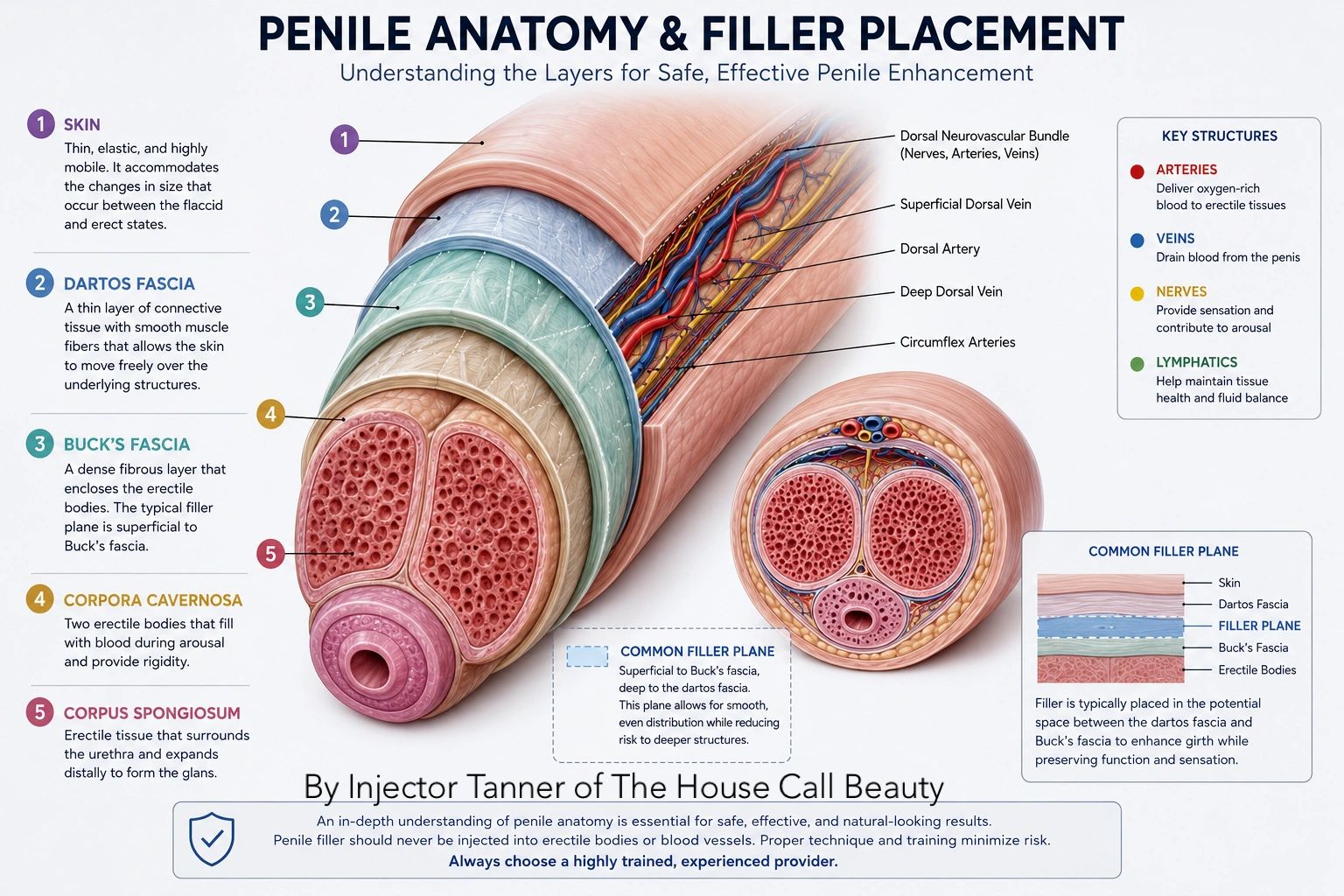
Understanding Penile Anatomy: Why Anatomy Matters for Safe Penile Filler Treatments
One of the most important factors in achieving safe, natural-looking results with non-surgical penile enhancement is a thorough understanding of penile anatomy. While patients do not need to memorize every anatomical structure, understanding the basics can help explain why choosing an experienced provider is so important.
The penis is a highly specialized organ composed of skin, fascia, blood vessels, nerves, lymphatics, and erectile tissues. Each structure has a unique function and must be respected during cosmetic treatment. Successful penile enhancement is not simply about adding volume it is about understanding where filler can be placed safely while preserving normal anatomy and function.
Penile Skin
The penile skin is thin, highly elastic, and remarkably mobile. This elasticity allows the penis to accommodate significant changes in size between the flaccid and erect states while maintaining normal movement.
From an aesthetic perspective, skin quality and elasticity influence treatment planning. Patients with greater skin laxity may be able to accommodate more volume during a single treatment session than patients with tighter skin. Every patient is different, and treatment should always be individualized rather than based on a predetermined filler volume.
Following treatment, hyaluronic acid gradually integrates within the surrounding tissues while attracting water and providing additional volume. Although patients often notice immediate improvement, the appearance continues to evolve during the healing process as swelling subsides and the filler settles.
Dartos Fascia
Immediately beneath the skin lies the dartos fascia, a thin layer of connective tissue containing smooth muscle fibers. This layer contributes to the mobility of the penile skin and serves as an important anatomical landmark during penile enhancement procedures.
Understanding the relationship between the skin and the dartos fascia helps guide treatment planning while minimizing unnecessary trauma to surrounding tissues.
Buck’s Fascia
Deeper within the shaft lies Buck’s fascia, a dense fibrous layer that surrounds and supports the erectile bodies of the penis.
Many contemporary penile filler techniques utilize the soft tissue plane superficial to Buck’s fascia. Selecting the appropriate tissue plane is one of the most important technical decisions during treatment because it influences filler distribution, contour, and safety. Individual techniques vary among experienced providers based on anatomy, training, and clinical judgment.
In my own practice, careful identification of the appropriate tissue plane is one of the most critical components of achieving predictable and natural-looking results.
The Erectile Bodies
The penis contains three cylindrical erectile structures:
- Two corpora cavernosa, which fill with blood during erection and provide rigidity.
- One corpus spongiosum, which surrounds the urethra and expands distally to form the glans penis.
Cosmetic dermal fillers are not intended to be injected into these erectile tissues. Doing so may increase the risk of serious complications and is inconsistent with accepted treatment principles.
Blood Supply
The penis has an extensive vascular network consisting of superficial and deep arteries, veins, and communicating branches.
Major vascular structures include:
- Dorsal arteries
- Deep cavernosal arteries
- Circumflex arteries
- Superficial dorsal veins
- Deep dorsal vein
Because these vessels supply oxygenated blood to the penile tissues, preserving them is essential. Although vascular complications are uncommon, they represent one of the most important risks associated with any dermal filler procedure. A provider performing penile enhancement should possess a detailed understanding of penile vascular anatomy and be prepared to recognize and manage vascular compromise immediately should it occur.
Nerves and Sensation
Normal penile sensation depends primarily on the paired dorsal nerves of the penis along with several smaller sensory branches.
Knowledge of these structures allows injectors to plan treatment carefully while minimizing unnecessary tissue trauma and maximizing patient comfort.
Why Anatomy Matters
Every successful penile filler treatment begins long before the first injection. It begins with anatomy.
The safest and most natural results are achieved when treatment is guided by a comprehensive understanding of tissue planes, vascular anatomy, biomechanics, and product behavior rather than simply focusing on adding volume.
In my opinion, anatomy is the single most important subject an injector can study. Filler products, injection techniques, and technologies will continue to evolve, but anatomy remains constant. A deep respect for anatomy, combined with careful patient assessment and sound clinical judgment, forms the foundation of safe, ethical, and predictable penile enhancement.
Section 4: Hyaluronic Acid and Other Injectable Biomaterials
What Is Hyaluronic Acid?
Hyaluronic acid, commonly abbreviated as HA, is a naturally occurring glycosaminoglycan found throughout the human body, particularly within the skin, connective tissues, joints, and extracellular matrix. One of its primary biological functions is to attract and retain water, helping tissues maintain hydration, elasticity, and volume.
In aesthetic medicine, hyaluronic acid is manufactured into injectable gels with different physical properties. These products are widely used for facial contouring, lip enhancement, chin augmentation, jawline definition, hand rejuvenation, and other soft tissue procedures. In carefully selected adult patients, HA fillers may also be used off-label for non-surgical penile girth enhancement.
The term “off-label” means that a licensed medical product is being used in a treatment area or manner that is not specifically included in its original regulatory approval. Off-label use is common throughout medicine, but patients should be informed of it during consultation and consent.
Why Hyaluronic Acid Is Commonly Used for Penile Girth Enhancement
Hyaluronic acid has several characteristics that make it an attractive material for non-surgical penile enhancement.
It provides immediate volume, has a soft and flexible consistency, and can be placed gradually over one or more treatment sessions. HA fillers are also available in a wide range of formulations, allowing an experienced provider to select a product based on tissue characteristics, desired projection, flexibility, cohesivity, and treatment goals.
Another important advantage is reversibility. When clinically appropriate, hyaluronic acid filler may be partially or fully dissolved using an enzyme called hyaluronidase. This may be useful in the management of significant overcorrection, persistent irregularity, unwanted product placement, or certain urgent complications.
Reversibility does not make the procedure risk-free. Penile filler remains an advanced injectable treatment requiring anatomical knowledge, sterile technique, sound clinical judgment, and the ability to recognize and respond to complications without delay.
Hyaluronic Acid as an Injectable Gel Implant
Although commonly described as a filler, cross-linked hyaluronic acid may also be understood as a temporary injectable gel implant. Once placed into tissue, it occupies space, attracts water, and interacts with the surrounding extracellular matrix.
The appearance immediately after treatment is not always the final result. Early swelling, tissue expansion, hydration, and product distribution can affect the initial contour. Over the following weeks, swelling generally decreases and the treated tissues begin to soften and settle.
This is one reason follow-up care is so important. The injector can evaluate symmetry, tissue response, filler distribution, and whether additional treatment may be appropriate after the initial healing period.
Understanding Filler Rheology
Not all hyaluronic acid fillers behave the same way. Their performance depends on a collection of physical characteristics known as rheology.
Rheology describes how a gel responds to force, movement, compression, and deformation. In penile enhancement, this is especially important because the tissues must accommodate substantial changes between the flaccid and erect states.
Elastic Modulus, or G Prime
Elastic modulus, commonly written as G’, describes how strongly a filler resists deformation.
A product with a higher G’ generally provides greater structural support and projection. A product with a lower G’ is often softer and may move more readily with surrounding tissue.
Higher firmness does not automatically make a product better. The appropriate degree of support depends on the patient’s anatomy, treatment area, desired result, and the provider’s technique.
Cohesivity
Cohesivity refers to how strongly the components of the gel remain connected to one another.
A highly cohesive gel may maintain its shape and remain more unified after placement. A less cohesive gel may spread more readily through tissue. Both characteristics can be useful in different clinical situations.
Viscosity
Viscosity describes a filler’s resistance to flow.
More viscous products may require greater extrusion force during injection and may provide greater structural presence. Less viscous products may be easier to distribute but may offer less projection or support.
Flexibility
Flexibility is particularly relevant in penile tissue because the penis changes significantly in shape, length, circumference, and tension during erection.
A filler selected for this area should be able to accommodate movement while maintaining a smooth contour. Product selection must therefore consider more than firmness alone.
Water Attraction and Swelling
Different HA fillers attract and retain different amounts of water. This can influence early swelling, final volume, tissue expansion, and the way the product feels after treatment.
The amount of swelling experienced after penile filler varies according to the product, volume injected, injection technique, anatomy, and individual inflammatory response.
Which Hyaluronic Acid Fillers May Be Considered?
Depending on the patient’s anatomy and treatment goals, different members of the Juvederm® Vycross® collection may be considered, including Juvederm® Voluma®, Juvederm® Volux®, and Juvederm® Vollure®.
These products are not interchangeable. They differ in firmness, flexibility, cohesivity, viscosity, lifting capacity, and tissue behavior.
In my practice, product selection is individualized rather than based on a universal formula. A filler appropriate for structural shaft enhancement may not be the same product selected for glans augmentation, refinement, or correction of a localized contour irregularity.
The objective is not simply to use the firmest or longest-lasting product. It is to select a material that complements the patient’s anatomy and supports a balanced, natural-looking result.
Juvederm Voluma
Juvederm Voluma is a highly cross-linked HA filler known for structural support, projection, and durability in approved facial indications. It has also been used off-label by experienced providers for penile girth enhancement.
Its supportive characteristics may be useful when increased shaft structure and volume are desired. However, the amount used and the tissue plane selected must be carefully considered to avoid excessive firmness, uneven distribution, or overcorrection.
Juvederm Volux
Juvederm Volux is a firm, highly structured HA filler developed for facial contouring and jawline definition. Its high support and resistance to deformation may make it useful in selected penile enhancement cases.
Because it is relatively firm and can require greater extrusion force, it should only be used by providers who understand its handling characteristics and tissue behavior. A product with substantial structural capacity must still be distributed carefully to preserve softness, mobility, and a natural contour.
Juvederm Vollure
Juvederm Vollure is generally softer and more flexible than highly structural HA fillers. These characteristics may make it useful for refinement, blending, contour correction, or selected glans augmentation cases.
Glans treatment differs anatomically and technically from shaft augmentation. Not every patient is a candidate, and the volume, product selection, and goals must be approached conservatively.
Can Different HA Fillers Be Combined?
Experienced providers may occasionally use more than one filler within an individualized treatment plan. This may involve layering or using different products in separate areas based on the desired level of structure, flexibility, or refinement.
Combining products should not be treated as a standard recipe. The decision requires a detailed understanding of each product’s rheology, compatibility, placement depth, and expected behavior in tissue.
Treatment plans should be based on anatomy and clinical judgment rather than a predetermined mixture or volume.
How Long Does Hyaluronic Acid Penile Filler Last?
The duration of HA penile filler varies considerably.
Longevity may be influenced by:
- The specific product used
- Degree of cross-linking
- Treatment volume
- Injection technique
- Tissue characteristics
- Individual metabolism
- Frequency of sexual activity and mechanical stress
- Previous treatments
- Maintenance schedule
Hyaluronic acid fillers are considered temporary because the body gradually breaks them down over time. However, the rate of degradation is highly individual, and some patients may retain visible or palpable improvement beyond the period they initially expected.
In my clinical experience, HA fillers can remain detectable longer than the manufacturer’s marketed duration in some treatment areas. This is a clinical observation, not a guarantee. Published longevity data from approved facial indications should not automatically be assumed to predict duration in penile tissue.
Will the Penis Return to Its Original Size?
Some patients eventually return close to their pretreatment baseline as the HA is metabolized. Others may retain subtle differences in contour or tissue thickness.
Several factors may contribute to this variation, including the amount of product used, repeat treatments, tissue adaptation, product persistence, and individual healing responses.
Current evidence does not support promising permanent enlargement from HA filler alone. Patients should consider the treatment temporary and understand that maintenance sessions may be needed to preserve the desired result.
Why Staged Treatment May Improve Results
Penile enhancement is often more predictable when approached in stages rather than attempting the maximum possible correction during one appointment.
A staged treatment plan allows the tissues to adapt gradually and gives the provider an opportunity to reassess:
- Symmetry
- Filler distribution
- Skin accommodation
- Tissue softness
- Patient satisfaction
- The need for refinement or additional volume
In my experience, a properly timed follow-up treatment can improve contour, balance, and overall satisfaction. However, additional filler should only be placed when the tissues have healed sufficiently and further treatment is clinically appropriate.
Other Injectable Materials
Hyaluronic acid is not the only injectable biomaterial used in penile enhancement. Other options may include poly-L-lactic acid, calcium hydroxylapatite, PMMA, silicone, and autologous fat.
These materials differ significantly in reversibility, inflammatory response, longevity, complication profile, and how they interact with tissue.
They should not be considered equivalent.
Sculptra and Poly-L-Lactic Acid
Sculptra® contains poly-L-lactic acid, commonly abbreviated as PLLA. Rather than acting primarily as a space-occupying gel, PLLA stimulates a gradual collagen response.
Results develop over time and often require multiple sessions. Because PLLA cannot be dissolved with hyaluronidase, correction of unwanted results may be more difficult than with HA filler.
Its use in penile tissue requires extensive knowledge of dilution, distribution, tissue response, nodule prevention, and patient selection.
Radiesse and Calcium Hydroxylapatite
Radiesse® contains calcium hydroxylapatite microspheres suspended in a gel carrier. It provides immediate volume while also stimulating collagen production.
CaHA behaves differently from hyaluronic acid and cannot be dissolved with hyaluronidase. Improper placement may produce firmness, nodules, contour irregularity, or other complications that are more difficult to reverse.
For this reason, it should only be considered in carefully selected cases by providers with substantial experience using the product in nontraditional treatment areas.
PMMA and Silicone
Permanent or semi-permanent materials such as PMMA and injectable silicone have historically been used for penile enlargement. These materials may produce long-lasting volume, but they also carry the possibility of delayed complications.
Potential concerns include chronic inflammation, granuloma formation, fibrosis, nodules, migration, deformity, infection, and the need for surgical removal.
Because they cannot be dissolved in the same manner as HA, managing complications may be considerably more difficult.
Fat Grafting
Autologous fat grafting uses the patient’s own fat, which is harvested through liposuction, processed, and transferred into the penis.
This is a surgical procedure rather than a simple injectable treatment. Some of the transferred fat may survive permanently, while another portion may be absorbed. Uneven retention can contribute to asymmetry, nodules, firmness, or contour irregularity.
Fat grafting may be appropriate for certain patients, but it involves different risks, recovery expectations, and technical considerations than hyaluronic acid filler.
Why Material Selection Matters
The material selected for penile enhancement directly influences the procedure’s safety, flexibility, reversibility, longevity, and correction options.
In my practice, I place significant value on hyaluronic acid because it offers immediate results, adjustable treatment planning, and the possibility of enzymatic dissolution when clinically appropriate such as in an emergency or underserisbIn those cases this is appropriate, but you can also use sculptra aka Poly l lactic acid or with the proper provider we can also do calcium Hydroxyapatite another dermal filler which is called radiesse
However, no biomaterial is risk-free. Safe outcomes depend on the interaction between the product, anatomy, injection technique, treatment volume, patient selection, and the provider’s ability to manage complications.
The best product is not necessarily the firmest, longest-lasting, or most expensive option. It is the product that is most appropriate for the individual patient and can be used safely by a properly trained provider.
Consultation, Patient Selection, and Candidacy
Why the Consultation Is the Most Important Appointment
Every successful penile enhancement treatment begins with a thorough consultation.
The consultation is not simply a formality or an opportunity to choose how many syringes of filler to use. It is a structured clinical assessment designed to determine whether treatment is appropriate, identify potential risk factors, establish realistic expectations, and develop an individualized plan based on the patient’s anatomy and goals.
Non-surgical penile enhancement should never be performed using a standardized, one-size-fits-all approach. Penile length, baseline circumference, skin mobility, tissue elasticity, previous procedures, medical history, and cosmetic concerns vary considerably from one patient to another.
A responsible provider must evaluate the entire clinical picture before recommending treatment.
What Is Reviewed During the Consultation?
A comprehensive consultation may include discussion of:
- Medical history
- Current medications and supplements
- Allergies
- Previous reactions to injectable products
- History of bleeding or clotting disorders
- Diabetes and blood glucose control
- Smoking or nicotine use
- Autoimmune or inflammatory conditions
- Previous penile procedures or surgeries
- Prior filler, fat grafting, silicone, PMMA, or implant placement
- Erectile function
- History of Peyronie’s disease or penile fibrosis
- Previous use of intracavernosal medications such as TriMix
- Current infections, wounds, ulcers, or skin conditions
- Cosmetic concerns and treatment goals
- Expectations regarding size, symmetry, feel, and longevity
Patients should provide complete and accurate information. Withholding a medical condition, medication, previous injection, or surgical history may increase the risk of complications or affect the provider’s ability to plan treatment safely.
Physical Examination and Anatomical Assessment
The physical examination is an essential part of determining candidacy.
The provider may evaluate:
- Baseline shaft length and circumference
- Flaccid appearance
- Skin mobility and elasticity
- Tissue thickness
- Existing asymmetry
- Areas of fibrosis or scar tissue
- Previous filler or implant material
- Penile curvature
- Retraction or concealment related to the suprapubic fat pad
- Glans-to-shaft proportion
- Circumcision status
- Signs of infection, inflammation, vascular compromise, or skin disease
The purpose of this assessment is not to criticize the patient’s anatomy. It is to understand the existing structure and determine what can be improved safely and realistically.
Standardized photographs and measurements may be obtained with the patient’s informed consent. These records can assist with treatment planning, comparison, follow-up, and documentation of healing.
Understanding the Patient’s Goals
Patients seek penile enhancement for many different reasons.
Some desire a modest improvement in shaft circumference. Others are concerned primarily with flaccid appearance, asymmetry, glans-to-shaft proportion, age-related tissue changes, or contour irregularities caused by previous procedures or injections.
The provider should ask the patient to describe the desired result in specific terms. Statements such as “I want it much larger” are not sufficient for responsible treatment planning. The consultation should clarify whether the patient is seeking:
- Greater shaft circumference
- A fuller flaccid appearance
- Improved symmetry
- Correction of a localized contour defect
- More proportion between the glans and shaft
- Restoration following weight loss or aging
- Correction of irregularities from prior filler or other procedures
- A subtle enhancement or a more substantial staged transformation
Clear communication reduces the risk of dissatisfaction and allows the provider to determine whether the patient’s expectations are achievable.
Who May Be a Candidate for Penile Filler?
Potential candidates are generally healthy adult patients who:
- Desire cosmetic improvement in penile girth
- Have realistic expectations
- Understand that HA filler is temporary
- Accept that maintenance treatments may be required
- Are able to follow aftercare instructions
- Are willing to attend follow-up appointments
- Do not have an active infection or untreated penile disease
- Understand the potential risks, benefits, and alternatives
- Are seeking treatment for themselves rather than under pressure from a partner or another person
Candidacy is not determined by age alone, assuming the patient is a legally consenting adult. Overall health, tissue quality, medical history, anatomy, and treatment goals are more important considerations.
Who May Require Additional Medical Evaluation?
Some patients may require evaluation by a primary care physician, urologist, dermatologist, endocrinologist, or another qualified healthcare professional before cosmetic treatment is considered.
Additional evaluation may be appropriate for individuals with:
- Erectile dysfunction
- Peyronie’s disease
- Significant penile curvature
- Painful erections
- Suspected fibrosis
- Reduced penile sensation
- Urethral symptoms
- Recurrent genital infections
- Unexplained lesions or discoloration
- Previous penile surgery
- Penile implants
- Complications from prior injectable materials
- Poorly controlled diabetes
- Significant vascular disease
- Active autoimmune or inflammatory disease
- Unexplained swelling or edema
Cosmetic filler should never be used as a substitute for proper diagnosis or treatment of an underlying medical condition.
TriMix-Related Fibrosis and Asymmetry
Some patients who use intracavernosal medications, including TriMix, may develop localized scar tissue, fibrosis, or contour irregularities over time.
TriMix is injected into the corpora cavernosa to assist with erection. Repeated injections, especially when performed inconsistently, into the same location, or with improper technique, may contribute to bruising, tissue trauma, fibrosis, nodules, or asymmetry.
Patients with suspected injection-related fibrosis should first be evaluated appropriately, particularly if they experience pain, curvature, changes in erection quality, or progressive deformity.
In selected patients, hyaluronic acid filler may help camouflage certain superficial contour irregularities. However, filler does not remove fibrosis, treat erectile dysfunction, or correct structural disease within the erectile bodies. The underlying condition must be distinguished from a purely cosmetic surface irregularity.
Diabetes and Penile Filler Candidacy
Diabetes does not automatically exclude a patient from treatment, but it requires careful consideration.
Poorly controlled diabetes may increase the risk of:
- Delayed healing
- Infection
- Impaired circulation
- Reduced immune response
- Skin breakdown
- More complicated recovery
Patients with diabetes may be asked about recent blood glucose control, medication adherence, wound healing history, neuropathy, vascular disease, and recent laboratory results such as hemoglobin A1c.
Elective cosmetic treatment may need to be postponed if blood glucose is poorly controlled or if the patient has active complications affecting circulation or healing.
Smoking, Nicotine, and Vascular Risk
Smoking and nicotine exposure can impair circulation and tissue healing.
Nicotine causes vasoconstriction, which reduces blood flow to tissues. This may increase concerns regarding delayed healing, infection, skin compromise, and the ability of tissues to recover after an injectable procedure.
Patients should disclose cigarette use, vaping, nicotine pouches, patches, gum, and other nicotine-containing products. The provider may recommend cessation before and after treatment based on the patient’s risk profile.
Previous Fillers, Silicone, PMMA, or Unknown Materials
A history of previous penile injections must be disclosed during consultation.
This includes:
- Hyaluronic acid filler
- Sculptra or other collagen stimulators
- Radiesse
- PMMA
- Silicone oil
- Fat transfer
- Unknown injectable substances
- Procedures performed outside the United States
- Treatments performed by unlicensed individuals
The presence of permanent or unknown material may alter tissue planes, increase inflammation, create scar tissue, and make future treatment more unpredictable.
In some cases, additional filler should not be placed until the existing material has been identified through medical records, ultrasound, MRI, or specialist evaluation.
Injecting into tissue containing unknown or permanent substances can increase the risk of nodules, granulomas, infection, migration, deformity, or delayed inflammatory reactions.
Psychological Readiness and Realistic Expectations
Patient selection includes psychological as well as physical assessment.
A suitable candidate should understand that cosmetic treatment can improve appearance but cannot guarantee confidence, relationship success, sexual performance, or emotional well-being.
Warning signs that may require treatment to be postponed or declined include:
- Expectations that are anatomically impossible
- Fixation on extremely small or unnoticeable imperfections
- Repeated dissatisfaction despite objectively acceptable results
- Pressure from a partner
- Belief that the procedure will repair a relationship
- Requests for unsafe volumes or extreme enlargement
- Inability to accept temporary swelling or normal healing
- Refusal to acknowledge risks
- Signs of body dysmorphic disorder
Declining treatment can be the most responsible clinical decision when a patient’s expectations, health, or motivations make a safe and satisfactory outcome unlikely.
Who May Not Be an Appropriate Candidate?
Treatment may be postponed or considered inappropriate in patients with:
- Active genital or systemic infection
- Open wounds, ulcers, or active dermatitis
- Unexplained penile lesions
- Poorly controlled diabetes
- Severe vascular disease
- Uncontrolled bleeding disorders
- Active sexually transmitted infection
- Significant untreated penile disease
- Severe fibrosis or deformity requiring urologic evaluation
- Known hypersensitivity to the selected product
- Active inflammatory reaction to previous filler
- Unrealistic expectations
- Inability to follow aftercare instructions
- Inability to provide informed consent
These considerations are not exhaustive. Every treatment decision must be individualized.
Setting Realistic Expectations
One of the most important responsibilities of the provider is explaining what penile filler can and cannot accomplish.
Hyaluronic acid filler may:
- Increase shaft circumference
- Improve the flaccid appearance
- Create a more balanced contour
- Camouflage selected superficial irregularities
- Improve glans-to-shaft proportion in appropriate cases
- Provide an immediate cosmetic change
Hyaluronic acid filler cannot reliably:
- Permanently enlarge the penis
- Guarantee increased length
- Treat erectile dysfunction
- Correct Peyronie’s disease
- Remove internal fibrosis
- Improve fertility
- Increase testosterone
- Guarantee improved sexual performance
- Eliminate all asymmetry
- Produce identical results in every patient
Natural anatomy has limits. Attempting to exceed those limits through excessive volume may increase swelling, irregularity, migration, firmness, compression, and other complications.
Why a Staged Treatment Plan Is Often Better
Many patients achieve better results through staged treatment rather than attempting dramatic enlargement during one session.
A staged approach allows the provider to evaluate how the tissues accommodate volume and how the filler behaves after swelling resolves.
It also permits reassessment of:
- Symmetry
- Contour
- Skin tension
- Product integration
- Tissue softness
- Patient satisfaction
- The need for refinement
- Whether additional volume can be added safely
More filler does not automatically produce a better result. The objective is proportion, balance, and tissue compatibility rather than reaching the highest possible number of milliliters.
Informed Consent
Informed consent means that the patient receives understandable information about the procedure before deciding whether to proceed.
Consent should include discussion of:
- The off-label nature of penile filler
- The selected product
- Expected benefits
- Limitations
- Reasonable alternatives
- Temporary nature of HA filler
- Common side effects
- Serious but uncommon complications
- Aftercare restrictions
- Potential need for correction or dissolution
- Financial responsibility for future maintenance or revision
- The possibility that the desired outcome may require more than one session
Signing a form alone does not constitute meaningful consent. The patient should have an opportunity to ask questions and should never feel pressured to proceed.
The Right to Decline or Postpone Treatment
A qualified provider must be willing to delay or decline treatment when it is not in the patient’s best interest.
This may occur when:
- Medical information is incomplete
- Infection or inflammation is present
- The anatomy requires specialist evaluation
- Expectations are unsafe or unrealistic
- Previous injectable material is unknown
- The patient is unable to comply with recovery restrictions
- The requested treatment exceeds what the tissues can safely accommodate
Responsible aesthetic medicine is not defined by agreeing to every request. It is defined by making decisions that prioritize patient welfare.
Preparing for Your Consultation
Before attending a consultation, patients should:
- Prepare a complete list of medications and supplements
- Disclose all previous penile procedures and injections
- Bring available medical records related to prior treatment
- Write down specific goals and questions
- Be prepared to discuss erectile function and relevant medical history honestly
- Avoid assuming that a predetermined filler volume will be appropriate
- Understand that a consultation does not guarantee treatment on the same day
The most useful consultation is one in which both the patient and provider communicate openly and evaluate the procedure carefully.
The Foundation of Safe Treatment
Patient selection is one of the most effective forms of complication prevention.
Technical ability alone is not enough. A provider must know when to treat, how much to treat, when to stage the procedure, when to request additional medical evaluation, and when not to proceed.
At The House Call Beauty®, the purpose of consultation is to create a treatment plan that respects the patient’s anatomy, health, goals, and long-term well-being. The best result begins with an honest assessment and a decision that places safety before volume.
What to Expect During Penile Filler Treatment
How the Procedure Is Planned
A penile filler appointment should never begin with the assumption that every patient requires the same product, volume, or technique. Treatment planning is individualized according to the patient’s anatomy, baseline shaft circumference, tissue elasticity, cosmetic goals, previous procedures, and overall suitability for treatment.
The provider should first confirm the treatment plan, review informed consent, answer any remaining questions, and ensure that the patient understands the expected benefits, limitations, recovery requirements, and potential complications.
Although hyaluronic acid penile augmentation has demonstrated measurable increases in girth and generally favorable satisfaction rates in published studies, treatment methods and protocols remain variable. This makes provider training, patient selection, anatomical judgment, and follow-up care especially important.
Before Treatment Begins
Before the procedure, the treatment area is examined for any signs of infection, inflammation, skin breakdown, irritation, or unexpected anatomical findings.
The skin is then cleansed using an appropriate medical antiseptic. Meticulous infection-control practices are essential because filler is being introduced beneath the skin and any injectable procedure creates a potential pathway for microorganisms.
Depending on the provider’s protocol, the patient’s anatomy, and the selected product, comfort measures may include:
- Topical anesthetic
- Local anesthetic
- A regional anesthetic technique
- Ice or cooling
- Oral comfort medication when medically appropriate
The choice of anesthesia should be individualized. The objective is to improve comfort without interfering with anatomical assessment or patient safety.
Marking and Anatomical Assessment
Before filler is placed, the provider may mark relevant anatomical landmarks and areas requiring augmentation, blending, or correction.
The assessment may include:
- Overall shaft contour
- Baseline asymmetry
- Areas of fibrosis or tethering
- Skin mobility
- Glans-to-shaft proportion
- Circumcision status
- Previous filler placement
- Areas requiring additional caution
- The transition between the penile shaft and pubic region
Treatment should be guided by anatomy rather than by a predetermined pattern copied from another patient.
Needle Versus Cannula
Penile filler may be placed using a needle, a blunt-tip cannula, or a combination of both, depending on the provider’s training and the clinical situation.
A needle allows precise product placement and may be useful for carefully selected focal corrections. However, because it has a sharp tip, it can penetrate blood vessels and deeper anatomical structures if used without appropriate control.
A blunt-tip cannula may allow filler to be distributed across a broader area through fewer entry points. It is often selected to reduce repeated sharp-needle passes, although a cannula does not eliminate the possibility of vascular injury, bleeding, tissue trauma, or other complications.
In my practice, I predominantly use a cannula for shaft augmentation and reserve needle use for highly selective circumstances in which a small, localized correction is clinically appropriate. The instrument should always be selected according to the anatomy, treatment objective, product characteristics, and provider’s judgment.
Neither instrument is inherently safe in untrained hands. Safety depends on anatomical knowledge, controlled technique, appropriate product placement, and immediate recognition of abnormal tissue responses.
Where Is Penile Filler Placed?
Hyaluronic acid filler used for cosmetic shaft enhancement is placed within a carefully selected soft-tissue plane surrounding the erectile structures rather than inside the erectile bodies themselves.
The penis contains two corpora cavernosa and one corpus spongiosum. These structures play essential roles in erection, urethral function, and glans anatomy. Cosmetic filler is not intended to be injected into them.
The selected placement plane should allow the material to enhance circumference while preserving mobility, sensation, and normal function. Published approaches vary, and there is not one universally standardized injection protocol for every patient.
For patient education, it is sufficient to understand that filler should be placed only within the intended soft-tissue compartment by a provider with detailed knowledge of penile anatomy. This procedure should not be attempted using superficial online instructions or generalized facial filler techniques.
How the Filler Is Distributed
During treatment, the filler is placed gradually rather than injected as one concentrated deposit.
The injector continually evaluates:
- Symmetry
- Tissue tension
- Product distribution
- Skin accommodation
- Contour
- Areas of excessive firmness
- Color and circulation
- Patient comfort
- Overall proportionality
The product must be distributed in a way that accounts for the penis in both its flaccid and erect states. A contour that appears acceptable while the penis is flaccid must also remain functional and aesthetically balanced as the tissues expand.
Careful distribution is essential because localized accumulation can contribute to palpable areas, nodules, irregularity, visible ridges, asymmetry, or migration. Filler migration and subcutaneous nodules are among the documented complications following HA penile augmentation.
How Much Filler Is Used?
There is no universal number of syringes or milliliters appropriate for every patient.
Treatment volume depends on:
- Baseline penile length and circumference
- Skin elasticity
- Tissue capacity
- Desired degree of enhancement
- Product rheology
- Previous filler
- Existing scar tissue
- Whether the procedure is being performed in stages
- The provider’s clinical assessment
Published studies have used a range of treatment volumes, but those protocols should not be interpreted as a standard recommendation for every patient. Different products, study populations, and injection methods make direct comparisons difficult.
I may use higher treatment volumes in carefully selected patients whose anatomy and tissues can accommodate them appropriately. However, the objective should never be to inject the maximum possible amount. The goal is to achieve a smooth, proportionate result without exceeding the tissue’s capacity.
More filler does not automatically mean a better outcome.
Why I Often Recommend a Staged Approach
Many patients benefit from completing penile enhancement across more than one treatment session.
During the first appointment, the initial foundation is created. After swelling subsides and the product integrates, the result can be assessed more accurately. A later treatment may then be used to add volume, improve symmetry, refine transitions, or address areas that settled differently than expected.
A staged approach provides several advantages:
- The tissues expand more gradually.
- Swelling is less likely to be mistaken for the final result.
- Symmetry can be reassessed after healing.
- Additional product can be placed more precisely.
- The provider can evaluate how the patient responds to the selected filler.
- The patient can decide whether the initial degree of enhancement is sufficient.
In my clinical experience, the follow-up treatment is often an important part of creating the most refined result. However, additional filler should only be placed after the tissues have healed appropriately and the provider determines that further treatment is safe.
Can the Glans Be Treated?
Glans augmentation is distinct from penile shaft enhancement.
The glans has different anatomy, vascularity, tissue characteristics, and functional considerations. It should not be treated as though it were simply an extension of the shaft.
Some patients seek glans augmentation to improve glans-to-shaft proportion, create a fuller appearance, or address selected cosmetic concerns. However, not every patient is an appropriate candidate, and the degree of achievable augmentation may be more limited than patients expect.
Published studies have evaluated HA injection into the glans for both aesthetic and sexual-medicine-related indications, but the evidence remains limited and outcomes vary.
At The House Call Beauty®, glans treatment is considered only after individualized assessment and a detailed discussion of its limitations, risks, expected appearance, and recovery.
Continuous Monitoring During Treatment
The injector should monitor the tissue continuously throughout the procedure.
This includes observing for:
- Unexpected blanching
- Dusky or mottled discoloration
- Severe or disproportionate pain
- Rapid swelling
- Abnormal bleeding
- Changes in tissue temperature
- Delayed capillary refill
- Unexpected resistance during product placement
- Signs suggesting compromised circulation
A normal amount of pressure or discomfort may occur during treatment, but severe pain or abnormal color change should never be ignored.
Patient safety is not limited to preventing complications. It also depends on recognizing an adverse event promptly and responding without delay.
Vascular Compromise and Emergency Preparedness
Vascular compromise occurs when blood flow to tissue is reduced or interrupted. Although uncommon, it is one of the most serious potential complications of injectable filler treatment.
Every provider performing penile enhancement should have:
- Appropriate emergency supplies
- Immediate access to hyaluronidase when using HA filler
- A written complication-management protocol
- The ability to assess tissue circulation
- A clear escalation and referral pathway
- Reliable postoperative communication
- The willingness to evaluate a patient urgently when concerning symptoms develop
Hyaluronidase can be used to dissolve hyaluronic acid in selected complications and unwanted outcomes, although dosing and management approaches vary and require clinical judgment.
In my opinion, the true measure of an injector is not only the ability to create an attractive result. It is also the ability to recognize a complication, remain composed, communicate honestly, and take immediate action when a patient needs help.
Final Assessment Before the Patient Leaves
Once treatment is complete, the provider should assess:
- Overall contour
- Symmetry
- Filler distribution
- Tissue color and perfusion
- Bleeding or bruising
- Patient comfort
- Entry points
- Any areas requiring closer observation
The patient should receive clear written and verbal aftercare instructions. These instructions should explain what is normal during early healing, what activities must be avoided, and which symptoms require immediate contact with the provider.
Follow-up should be scheduled rather than left entirely to the patient. Early review may be recommended depending on the provider’s protocol, followed by another assessment after swelling has resolved sufficiently to evaluate the cosmetic result.
What the Patient May Notice Immediately
Immediately after penile filler treatment, patients may experience:
- Swelling
- Mild tenderness
- Bruising
- Temporary firmness
- A sensation of pressure or fullness
- Minor initial asymmetry
- Small amounts of bleeding at entry points
- Temporary changes in how the filler feels beneath the skin
The penis may initially appear larger than the eventual result because of swelling. Early irregularity does not necessarily indicate a permanent problem, but it should be monitored.
Patients should not aggressively manipulate or massage the area unless specifically instructed by their treating provider. Different products and placement methods require different postoperative management.
Treatment Is More Than the Injection
A penile enhancement procedure includes far more than product placement.
It includes:
- Appropriate patient selection
- Medical assessment
- Anatomical planning
- Product selection
- Sterile preparation
- Controlled filler placement
- Continuous vascular monitoring
- Immediate postoperative evaluation
- Clear aftercare
- Reliable follow-up
- Timely complication management when needed
The injection itself may take a limited amount of time, but the provider’s responsibility begins before treatment and continues throughout the healing process.
At The House Call Beauty®, the objective is not simply to increase girth. It is to create a balanced, natural-looking result through individualized planning, meticulous technique, and an uncompromising commitment to patient safety.
Recovery, Aftercare, Healing, and Follow-Up
One of the greatest advantages of non-surgical penile enhancement with hyaluronic acid filler is that recovery is generally much shorter than with surgical augmentation. Because there are no large incisions, sutures, or implanted prosthetic devices, most patients are able to return home shortly after treatment and resume many normal daily activities within a relatively short period.
Every patient heals differently. Recovery depends on several factors, including the amount of filler placed, the specific product used, injection technique, individual anatomy, overall health, and adherence to aftercare instructions. While general guidelines can be helpful, your treating provider’s recommendations should always take precedence.
What to Expect Immediately After Treatment
Immediately following treatment, it is normal to experience temporary swelling, mild tenderness, and a sensation of fullness within the treated tissues. Small amounts of bruising may also occur at the entry sites, particularly if a needle was used during any portion of the procedure.
Patients commonly notice:
- Mild to moderate swelling
- Temporary bruising
- Tenderness to touch
- A feeling of firmness
- Mild redness around the entry point
- Temporary asymmetry caused by swelling
- Increased shaft circumference that may initially appear greater than the final result
These findings are generally expected during the early healing period and should gradually improve over the following days and weeks.
Recovery Timeline
Day 0
Immediately after treatment, the penis will typically appear larger than the eventual healed result due to swelling and the immediate volume provided by the filler.
Minor bruising, tenderness, and firmness are common.
Your provider will review aftercare instructions before you leave the office.
Days 1-3
Swelling often reaches its maximum during the first several days before gradually improving.
Minor asymmetry during this period is common and does not necessarily represent the final cosmetic outcome.
Patients should avoid evaluating their results too early.
Days 4-7
Swelling and tenderness usually begin to decrease noticeably.
Bruising, if present, often starts to resolve.
The overall contour typically becomes smoother as the filler begins integrating with the surrounding tissues.
Weeks 2-4
The majority of swelling has resolved.
The filler continues to settle while the tissues soften.
This period provides a much more accurate representation of the final cosmetic outcome.
Many providers schedule follow-up evaluation during this timeframe to determine whether any refinement or additional treatment would be beneficial.
Beyond One Month
By one month, most patients have reached a stable result.
Residual tissue remodeling may continue beyond this point, but the overall contour and girth are generally well established.
If additional enhancement is desired, your provider can discuss whether a touch-up treatment is appropriate.
General Aftercare Instructions
Following treatment, patients should carefully follow all instructions provided by their treating clinician.
General recommendations often include:
- Keep the treatment area clean.
- Wear supportive but nonrestrictive underwear.
- Avoid unnecessary manipulation of the treated area unless specifically instructed by your provider.
- Stay well hydrated.
- Attend all scheduled follow-up appointments.
- Contact your provider if you notice unexpected symptoms.
Proper aftercare contributes significantly to achieving the best possible cosmetic outcome.
Exercise and Physical Activity
Light walking and routine daily activities are generally permitted shortly after treatment unless otherwise instructed.
Patients are commonly advised to avoid:
- Heavy lifting
- Vigorous exercise
- Cycling
- Activities that place prolonged pressure on the groin
- Contact sports
Your provider will advise when these activities may safely be resumed based on your individual recovery.
Sexual Activity
One of the most common questions patients ask concerns sexual activity following penile filler treatment.
Although recommendations vary depending on technique and provider preference, many clinicians recommend avoiding masturbation and activities that place significant mechanical stress on the treated tissues for approximately two weeks.
Penetrative sexual activity is commonly postponed for approximately four weeks or until your provider determines that adequate healing has occurred.
Allowing sufficient healing time may reduce unnecessary inflammation, filler displacement, and prolonged swelling.
Hygiene
Patients may generally shower according to their provider’s instructions.
The treatment area should be kept clean and dry, and any specific wound-care instructions should be followed carefully.
Avoid swimming pools, hot tubs, lakes, and other potentially contaminated water sources until your provider advises they are safe.
I highly suggest cleansing with Chlorahexidine, aka Hibclens.
Swelling
Swelling is one of the most common and expected parts of recovery.
Several factors influence swelling, including:
- Individual inflammatory response
- Treatment volume
- Injection technique
- Product selection
- Activity level following treatment
Because swelling may temporarily exaggerate the cosmetic result, patients should avoid judging the outcome during the first several days.
Patience is an important part of the healing process.
Bruising
Bruising varies considerably from one patient to another.
Some patients develop very little bruising, while others may experience more noticeable discoloration.
Bruising generally improves over one to two weeks and typically resolves without permanent effects.
Follow-Up Appointments
Follow-up is an essential part of treatment rather than an optional visit.
During follow-up, your provider evaluates:
- Overall healing
- Symmetry
- Filler distribution
- Tissue softness
- Cosmetic outcome
- Areas requiring refinement
- Whether additional treatment would be beneficial
This appointment also provides an opportunity for patients to ask questions and discuss their satisfaction with the results.
When Should You Contact Your Provider?
Although mild swelling and tenderness are expected, patients should contact their provider immediately if they experience:
- Severe or worsening pain
- Rapidly increasing swelling
- Progressive discoloration
- Skin turning pale, purple, blue, or black
- Fever
- Drainage suggestive of infection
- Increasing redness spreading beyond the treatment area
- Severe firmness associated with significant pain
- Any symptom that causes concern
Prompt evaluation allows potential complications to be recognized and managed as early as possible.
Why Follow-Up Matters
Beautiful cosmetic outcomes are not determined solely by the injection itself.
They are the result of thoughtful planning, meticulous technique, careful healing, and continued communication between the patient and provider.
In my opinion, the recovery period is just as important as the treatment itself. Patients who understand what to expect, follow aftercare instructions, attend follow-up appointments, and communicate openly with their provider are more likely to achieve smooth healing and excellent long-term results.
At The House Call Beauty®, patient care does not end when the procedure is complete. Recovery, follow-up, education, and ongoing support remain an important part of every treatment journey.
Potential Risks, Complications, and Warning Signs
Non-surgical penile enhancement with hyaluronic acid filler is generally well tolerated in appropriately selected patients, but it is not risk-free. The penis has a complex vascular, neurological, lymphatic, and fascial anatomy, and complications may become significant when they are not identified and managed promptly.
Published research has reported mostly mild or temporary adverse effects, but the available evidence is still limited, treatment protocols are not fully standardized, and long-term data remain less extensive than they are for many established facial filler indications. Documented complications include swelling, bruising, nodules, asymmetry, migration, bleeding, and infection.
Patients should receive an honest explanation of both common side effects and uncommon but potentially serious complications before choosing treatment.
Expected Side Effects Versus Complications
Some temporary effects are expected during normal healing and do not necessarily indicate that something has gone wrong.
Common early effects may include:
- Swelling
- Mild bruising
- Tenderness
- Temporary firmness
- Mild redness at entry points
- A sensation of pressure or fullness
- Minor asymmetry while swelling resolves
These symptoms should generally improve rather than become progressively worse.
A complication is more likely when symptoms are severe, continue to intensify, appear unexpectedly after initial improvement, or are accompanied by abnormal discoloration, fever, drainage, skin breakdown, or increasing pain.
Swelling and Penile Edema
Swelling is one of the most common effects following penile filler treatment.
The degree of swelling varies according to treatment volume, product characteristics, injection technique, anatomy, circumcision status, lymphatic drainage, and individual inflammatory response.
Mild to moderate edema commonly improves as the tissues heal. However, severe, rapidly worsening, painful, or prolonged swelling requires evaluation.
Published literature suggests that anatomical factors, including redundant foreskin, may contribute to a greater risk of postoperative edema or filler migration in some patients.
Patients should not assume that every episode of swelling is harmless. When swelling is accompanied by significant pain, color change, fever, discharge, difficulty urinating, or increasing tightness, the treating provider should be contacted promptly.
Bruising and Bleeding
Small blood vessels may be disrupted during any injectable procedure, resulting in bruising or limited bleeding at the entry points.
Most bruising resolves without treatment. More significant bleeding may occur in patients who use anticoagulant or antiplatelet medications, have an underlying bleeding disorder, take certain supplements, or experience vascular trauma during treatment.
Patients should never discontinue prescribed medication without approval from the prescribing healthcare professional.
Rapidly expanding swelling, severe pressure, or a tense collection of blood may suggest a hematoma and warrants urgent assessment.
Temporary Asymmetry
Temporary asymmetry is common during the early healing period because swelling rarely develops or resolves perfectly evenly.
A true contour irregularity should generally be assessed after the majority of swelling has subsided. Depending on its cause, management may involve observation, provider-directed manipulation, additional filler, partial dissolution, or complete dissolution.
Patients should not aggressively massage or attempt to reshape the filler unless they have received specific instructions from their provider. Unsupervised manipulation may worsen migration, swelling, inflammation, or contour irregularity.
Palpable Filler and Nodules
Some patients may temporarily feel the filler beneath the skin, particularly while swelling is present and the tissues are still settling.
A nodule is a localized lump that may develop because of concentrated product placement, uneven distribution, superficial placement, inflammation, infection, fibrosis, or a delayed tissue response.
Subcutaneous nodules are among the better-documented complications of HA penile augmentation. One review reported them in approximately 2.2% of treated patients, although complication rates vary across studies and techniques.
Not all nodules are managed in the same way. Treatment depends on whether the area is soft or firm, painful or painless, inflamed or noninflamed, and whether infection or another process is suspected.
Possible management options may include:
- Observation
- Provider-directed massage
- Hyaluronidase
- Anti-inflammatory treatment
- Antibiotic treatment when infection is suspected
- Imaging
- Specialist referral
- Surgical treatment in uncommon cases
A provider should determine the cause before attempting correction.
Filler Migration
Migration occurs when filler moves away from the intended treatment area.
This may contribute to irregular contour, accumulation near the base or distal shaft, palpable ridges, asymmetry, or an unnatural transition between treated and untreated tissues. Filler migration is recognized in the published literature as a complication of penile HA augmentation.
Potential contributing factors include:
- Excessive treatment volume
- Inappropriate placement
- Uneven distribution
- Tissue anatomy
- Early mechanical pressure
- Premature sexual activity
- Repeated manipulation
- Product characteristics
- Previous scar tissue or injectable material
Management may include observation, redistribution when clinically appropriate, or dissolution with hyaluronidase.
Infection
Any procedure that penetrates the skin creates a potential route for microorganisms to enter the tissue.
Possible signs of infection include:
- Increasing redness
- Progressive warmth
- Worsening tenderness
- Purulent drainage
- Fever or chills
- Foul odor
- Increasing swelling after initial improvement
- Skin breakdown
- General illness
Reported infection rates following HA penile augmentation have generally been low, but infections may become serious if diagnosis or treatment is delayed.
Patients should not attempt to treat suspected infection with leftover antibiotics, topical products, squeezing, puncturing, or self-drainage. A medical evaluation is required because treatment may involve antibiotics, drainage, dissolution of HA filler, imaging, cultures, or specialist referral.
Delayed Inflammatory Reactions
Inflammatory reactions may occasionally develop weeks, months, or longer after filler placement.
Symptoms may include:
- Swelling
- Tenderness
- Firmness
- Redness
- Multiple nodules
- Recurrent episodes of inflammation
Possible triggers may include infection, immune activation, dental or medical illness, trauma, product characteristics, or interaction with previously injected materials.
Delayed swelling should not automatically be assumed to be an allergy or infection. Proper evaluation is required because management differs according to the underlying cause.
Allergic and Hypersensitivity Reactions
True allergic reactions to modern HA filler are uncommon, but hypersensitivity may occur in response to the filler, residual manufacturing components, antiseptics, anesthetics, adhesive materials, or hyaluronidase.
Symptoms may include itching, hives, facial swelling, difficulty breathing, dizziness, or widespread rash.
Difficulty breathing, swelling of the tongue or throat, fainting, or rapidly progressive allergic symptoms require emergency medical assistance.
Patients should disclose previous reactions to fillers, anesthetics, medications, antiseptics, and hyaluronidase before treatment.
Vascular Compromise
Vascular compromise occurs when blood supply to tissue is reduced or interrupted. This may result from filler entering a blood vessel, compressing a vessel, or causing sufficient swelling or pressure to impair circulation.
Although considered uncommon, vascular compromise is one of the most serious possible complications of dermal filler treatment.
Warning signs may include:
- Severe or disproportionate pain
- Sudden blanching
- Dusky, gray, purple, or mottled skin
- Coolness of the tissue
- Delayed capillary refill
- Progressive discoloration
- Development of blisters
- Skin breakdown
- Increasing pain rather than improvement
Vascular compromise is time-sensitive. Consensus guidance for HA filler occlusion emphasizes prompt recognition and treatment, commonly including hyaluronidase when HA filler is involved.
A patient who develops concerning symptoms should contact the treating provider immediately and seek urgent medical evaluation. Waiting until the following day or hoping severe symptoms resolve independently may allow tissue injury to progress.
Tissue Ischemia and Necrosis
Ischemia means that tissue is not receiving adequate blood and oxygen. If blood flow is not restored, tissue injury and necrosis may occur.
Early ischemic changes may initially appear subtle. The skin may become pale, mottled, unusually painful, or cool. With progression, discoloration may deepen and blisters, ulceration, or tissue loss may develop.
Prompt intervention provides the best opportunity to restore circulation and limit permanent injury.
Although hyaluronidase may dissolve HA filler, it does not guarantee reversal of tissue injury, particularly when treatment is delayed. This is why rapid recognition and escalation are critical.
Changes in Sensation
Temporary altered sensation may occur because of swelling, local anesthetic, pressure, bruising, or tissue trauma.
Persistent numbness, burning, severe hypersensitivity, weakness, or loss of normal sensation requires evaluation. These symptoms may indicate nerve irritation, compression, vascular compromise, inflammation, or another complication.
Patients should also report meaningful changes in urinary or sexual function.
Painful Erections or Erectile Changes
Some tenderness during spontaneous erections may occur in the early healing period because the tissues are swollen and adapting to the added volume.
Severe pain, persistent painful erections, worsening curvature, new erectile dysfunction, or a major change in erection quality should not be dismissed as routine healing.
Penile filler is not intended to enter the corpora cavernosa or corpus spongiosum. Symptoms suggesting injury to deeper erectile tissues require medical assessment and, when appropriate, urological referral.
Urinary Symptoms
Penile filler should not interfere with urination.
Patients should seek prompt evaluation if they develop:
- Difficulty beginning urination
- Weak urinary stream
- Inability to urinate
- Blood in the urine
- Significant urethral pain
- New discharge
- Marked swelling around the urethral opening
These symptoms may be unrelated to the filler, but they require appropriate assessment rather than cosmetic correction alone.
Complications Associated With Permanent or Unknown Materials
Patients who have previously received silicone, PMMA, paraffin, mineral oil, biopolymers, unknown substances, or other permanent materials may have a more complicated risk profile.
Potential problems include:
- Chronic inflammation
- Granulomas
- Fibrosis
- Migration
- Infection
- Tissue deformity
- Skin breakdown
- Erectile dysfunction
- Need for surgical removal
Permanent materials cannot be dissolved with hyaluronidase. Complications may appear years after injection and may require imaging, specialist management, or reconstructive surgery.
Patients must disclose every previous penile injection, even when the product name is unknown or the procedure occurred many years earlier.
Hyaluronidase and Correction of HA Filler
Hyaluronidase is an enzyme that breaks down hyaluronic acid and may be used to correct selected HA filler complications or unwanted cosmetic outcomes. It is considered an important tool in the management of HA filler-related problems.
It may be considered for:
- Vascular compromise
- Significant overcorrection
- Migration
- Persistent irregularity
- Selected nodules
- Unwanted product placement
- Certain inflammatory or infectious complications
Hyaluronidase should not be described as a simple reset button. Dissolution may be incomplete, may require more than one treatment, and can temporarily affect naturally occurring HA within surrounding tissue.
Treatment also carries its own risks, including swelling, bruising, discomfort, allergic reaction, and an unpredictable degree of correction.
Complications Can Occur Even in Experienced Hands
A complication does not automatically prove that a provider was careless or unqualified. Injectable medicine contains inherent risk, and adverse events can occur despite appropriate patient selection, planning, anatomy knowledge, and technique.
However, a provider’s conduct before, during, and after a complication is highly relevant.
In my opinion, the true measure of an injector is not simply the ability to produce an attractive result. It is the ability to recognize an abnormal finding, communicate honestly, remain available, initiate appropriate management, document what occurred, and escalate care without delay when a patient requires additional medical support.
Providers who perform penile filler should have complication protocols, immediate access to hyaluronidase when injecting HA, reliable patient communication, and an established pathway for emergency or specialist referral.
When to Seek Immediate Medical Attention
Patients should contact their provider immediately or seek urgent medical care for:
- Severe or rapidly worsening pain
- Pale, gray, blue, purple, or black discoloration
- Rapidly increasing swelling
- Blistering or skin breakdown
- Fever, chills, or systemic illness
- Pus or foul-smelling drainage
- Inability to urinate
- Significant bleeding
- Sudden loss of sensation
- Severe pain during erection
- Shortness of breath, facial swelling, or signs of an allergic emergency
- Any rapidly progressing or alarming symptom
Patients should not wait for a routine follow-up appointment when symptoms suggest compromised circulation, infection, or another urgent complication.
Reducing Risk
No provider can eliminate every risk, but complications may be reduced through:
- Careful patient selection
- Complete medical disclosure
- Appropriate anatomical assessment
- Conservative treatment planning
- Thoughtful product selection
- Meticulous sterile technique
- Controlled injection technique
- Avoidance of excessive volume
- Continuous monitoring during treatment
- Clear aftercare instructions
- Reliable follow-up
- Immediate evaluation of warning signs
Patients also play an important role by following recovery restrictions, avoiding premature sexual activity, attending follow-up appointments, and reporting concerns promptly.
Safety Must Remain the Priority
Penile filler should never be approached as a casual cosmetic service or judged solely by the number of milliliters injected.
The best outcome is not necessarily the largest possible result. It is an improvement that respects the patient’s anatomy, preserves function, appears proportionate, and heals without avoidable harm.
At The House Call Beauty®, patient safety remains the foundation of treatment. Cosmetic enhancement is valuable only when it is paired with responsible patient selection, transparent education, careful technique, and continued support throughout recovery.
Results, Longevity, Maintenance, and Realistic Expectations
Non-surgical penile enhancement with hyaluronic acid filler is designed primarily to increase penile circumference and improve contour. Results are visible immediately, but the appearance observed directly after treatment is not the final outcome because swelling, tissue expansion, and temporary firmness can exaggerate the initial size.
The most reliable assessment occurs after the early healing period, when swelling has decreased and the filler has settled into the surrounding tissues.
What Results Can Penile Filler Provide?
Depending on the patient’s anatomy, treatment plan, and amount of product used, hyaluronic acid filler may provide:
- Increased shaft circumference
- A fuller flaccid appearance
- Improved symmetry
- Smoother contour
- Better balance between the shaft and glans
- Camouflage of selected superficial irregularities
- Greater definition through the visible shaft
- Restoration of volume lost through aging or previous procedures
The degree of improvement varies substantially between patients. Baseline anatomy, skin elasticity, penile length, tissue capacity, circumcision status, prior filler, and healing response all influence the final result.
The objective should be a proportionate enhancement that remains natural in appearance and function, not simply the largest possible increase.
Girth Versus Length
Hyaluronic acid penile filler is primarily a girth-enhancement treatment.
It does not reliably increase erect penile length because filler is placed within the soft tissues surrounding the shaft rather than altering the internal erectile structures or suspensory anatomy.
Some patients may notice that the penis appears longer in the flaccid state after treatment. This may occur because the added weight and volume reduce retraction or create a more substantial hanging appearance. This visual effect should not be described as a guaranteed anatomical length increase.
Patients whose primary concern is penile length should receive a separate evaluation of their anatomy, expectations, and available treatment options.
Flaccid and Erect Results
Penile filler can affect the appearance of the penis differently in the flaccid and erect states.
In the flaccid state, the added volume is often more visually noticeable because the penis is relaxed and the tissues are not stretched. Many patients report that this fuller resting appearance is one of the most meaningful benefits of treatment.
During erection, the shaft expands and lengthens, which distributes the filler across a larger surface area. The increase in circumference may remain noticeable, but the degree of visual change can differ from what is seen while flaccid.
A well-planned treatment should account for both states. The result should remain smooth, mobile, and proportionate as the tissues change during erection.
When Are Final Results Visible?
Results appear immediately, but early swelling can make the penis look larger, firmer, or less symmetrical than it will after healing.
A general progression may include:
Immediately After Treatment
The shaft appears fuller, but swelling and local anesthetic may affect the shape, firmness, and symmetry.
First Week
Swelling, bruising, and temporary irregularity may still be present. Patients should not judge the final outcome during this period.
Two to Four Weeks
The tissues generally become softer, swelling decreases, and the filler begins to feel more integrated. This is often a more appropriate period for initial cosmetic assessment.
One to Three Months
The result is usually more stable. Minor changes in softness, distribution, and tissue adaptation may continue.
Every patient heals at a different rate. A result should not be declared unsuccessful or final based solely on its appearance during the first few days.
How Much Girth Increase Is Possible?
The amount of circumference gained depends on several variables, including:
- Baseline penile dimensions
- Number of milliliters placed
- Product characteristics
- Distribution of the filler
- Skin and tissue elasticity
- Whether treatment is completed in one or multiple stages
- The amount of swelling present during measurement
- Individual metabolism and healing response
A specific increase should never be guaranteed before treatment.
Patients with a longer shaft may require more product to create the same visible change achieved with a smaller volume in a shorter shaft. The filler must be distributed across the available surface area, which means the same number of milliliters can produce very different outcomes in different patients.
The responsible approach is to estimate a realistic range rather than promise an exact measurement.
Why More Filler Does Not Always Produce a Better Result
Patients sometimes assume that the largest number of syringes will produce the best outcome. This is not necessarily true.
Excessive volume may increase the risk of:
- Prolonged swelling
- Uneven distribution
- Filler migration
- Excessive firmness
- Visible ridges
- Palpable product
- Poor glans-to-shaft proportion
- Skin tension
- Compression of surrounding tissues
- An unnatural appearance
Every tissue has a limit to how much volume it can accommodate safely and aesthetically.
A conservative or staged approach often produces a smoother result because the provider can evaluate tissue response before placing additional filler.
How Results Are Measured
Standardized measurements may be taken before and after treatment to document changes in circumference.
For measurements to be meaningful, they should be performed consistently. Variables such as room temperature, anxiety, degree of retraction, erection quality, swelling, and measurement location can significantly affect the result.
Circumference may be documented at several points, such as:
- Proximal shaft
- Midshaft
- Distal shaft
Measurements taken immediately after treatment may reflect swelling and should not be considered equivalent to healed results.
Standardized photographs may also be useful when obtained with informed consent and appropriate privacy protections.
Natural-Looking Results
A natural result is not defined solely by size. It is also determined by:
- Smoothness
- Symmetry
- Proportionality
- Softness
- Mobility
- Glans-to-shaft balance
- Transition at the penile base
- Appearance during both flaccid and erect states
The result should complement the patient’s existing anatomy rather than appear as a separate layer of material beneath the skin.
In my opinion, the most refined penile filler results are often the ones that do not immediately look “injected.” The enhancement should be noticeable, but the contour should remain believable and anatomically balanced.
Will Penile Filler Feel Natural?
Once swelling resolves and the filler integrates, many patients report that the treated tissue feels soft and natural.
The final feel depends on:
- Product selection
- Filler firmness
- Placement depth
- Distribution
- Treatment volume
- Healing response
- Existing scar tissue
- Previous injectable materials
Temporary firmness is common during early healing. Persistent hardness, painful nodules, or highly localized areas of product should be assessed by the treating provider.
A highly structured filler may feel firmer than a more flexible product. This is why filler selection should be based on tissue behavior and treatment goals rather than longevity alone.
Will a Partner Be Able to Feel the Filler?
A partner may notice increased circumference, particularly when a meaningful amount of volume has been added.
Ideally, the filler itself should not feel like isolated lumps, ridges, or hard deposits. A smooth, evenly distributed result should feel like fuller soft tissue rather than a separate implant.
Patients should understand that sensation is subjective. A partner who is familiar with the patient’s pretreatment anatomy may notice changes more readily than someone who is not.
Open communication with a partner may be helpful, but the decision to disclose cosmetic treatment remains personal.
Does Penile Filler Improve Sexual Performance?
Penile filler is a cosmetic girth-enhancement procedure. It is not an established treatment for erectile dysfunction, low libido, infertility, reduced testosterone, or relationship concerns.
Some patients report increased confidence or satisfaction after treatment, which may positively influence their sexual experience. However, psychological confidence and physiological sexual function are not the same.
Penile filler should not be expected to:
- Create stronger erections
- Increase testosterone
- Correct erectile dysfunction
- Delay ejaculation reliably
- Improve fertility
- Increase sexual desire
- Guarantee greater partner satisfaction
Any claims concerning sexual performance should be discussed carefully and without exaggeration.
Does Penile Filler Affect Sensation?
The objective is to preserve normal sensation.
Temporary numbness or altered sensitivity may occur during early recovery because of local anesthetic, swelling, bruising, or pressure within the tissues.
Persistent numbness, burning, severe hypersensitivity, or loss of normal sensation requires evaluation.
Some patients describe a subjective change in sexual sensation after augmentation, but these experiences vary and should not be promised as a predictable benefit.
Does Penile Filler Affect Erections?
Properly placed filler should not interfere with the erectile bodies or the physiological mechanism of erection.
The corpora cavernosa and corpus spongiosum are deeper structures and should not be entered during cosmetic shaft augmentation.
Temporary tightness or tenderness may occur during erections while swelling is present. Severe pain, worsening curvature, changes in erection quality, or new erectile dysfunction should be evaluated promptly.
Penile filler should never be presented as a substitute for a urological assessment when erectile symptoms are present.
How Long Do Results Last?
Hyaluronic acid filler is temporary because the body gradually breaks it down.
The duration of penile filler varies and may be influenced by:
- Product formulation
- Degree of cross-linking
- Treatment volume
- Individual metabolism
- Tissue characteristics
- Mechanical stress
- Frequency of sexual activity
- Previous treatments
- Immune and inflammatory responses
- Maintenance schedule
Some patients may notice gradual reduction over many months, while others retain a visible improvement for longer than expected.
There is no exact expiration date at which all filler suddenly disappears. Degradation is usually gradual.
Longevity from facial indications should not automatically be applied to penile tissue because the anatomy, mobility, vascularity, and mechanical forces are different.
Will All of the Filler Disappear?
Hyaluronic acid is considered biodegradable, but the rate and completeness of degradation can vary.
Some patients may return close to baseline. Others may retain a subtle degree of volume, tissue expansion, or contour change after much of the product has been metabolized.
Repeat treatments may also make it difficult to determine exactly how much previous filler remains.
Persistent product should not automatically be interpreted as a complication. However, unexpected firmness, swelling, pain, or irregularity should be evaluated.
Maintenance Treatments
Patients who wish to preserve their results may choose periodic maintenance.
Maintenance does not necessarily require repeating the full initial treatment volume. A smaller amount may be used to restore gradual volume loss, improve symmetry, or refine contour.
The timing of maintenance should be determined by:
- Visible changes
- Physical examination
- Remaining filler
- Tissue quality
- Patient goals
- Previous treatment response
- Safety considerations
Maintenance should not be scheduled automatically simply because a certain number of months has passed. The tissues should be evaluated before additional product is placed.
Touch-Ups Versus Maintenance
A touch-up and a maintenance treatment are not necessarily the same.
A touch-up is usually performed after the initial healing period to improve symmetry, fill a localized area, or complete a staged treatment plan.
Maintenance is performed later to restore volume that has gradually decreased over time.
Patients should understand which type of follow-up treatment is being recommended and why.
Can Penile Filler Be Dissolved?
Hyaluronic acid filler may be dissolved with hyaluronidase when clinically appropriate.
Dissolution may be considered for:
- Unwanted volume
- Significant asymmetry
- Migration
- Persistent nodules
- Incorrect placement
- Vascular compromise
- Selected inflammatory or infectious complications
Dissolution is not always immediate or perfectly predictable. More than one session may be required, and the final appearance may not return instantly to the exact pretreatment baseline.
Hyaluronidase can also temporarily reduce naturally occurring hyaluronic acid in the surrounding tissues, which may contribute to temporary looseness, deflation, or textural change.
Satisfaction and Expectations
Patient satisfaction depends on more than the numerical increase in circumference.
A patient may gain measurable girth and still feel dissatisfied if the result does not match an unrealistic expectation. Conversely, a modest increase may create substantial satisfaction when it improves proportion, symmetry, and confidence.
High satisfaction is more likely when:
- Goals are clearly defined
- Expectations are realistic
- The treatment plan is individualized
- The patient understands the temporary nature of HA
- Recovery is explained thoroughly
- The result is evaluated after swelling resolves
- Follow-up care is available
- The patient is prepared for staged treatment when appropriate
The consultation should establish what improvement would be meaningful to the patient without encouraging unsafe or anatomically unrealistic goals.
Comparing Results Online
Before-and-after photographs can be helpful, but they must be interpreted carefully.
Online images may differ because of:
- Lighting
- Camera angle
- Distance
- Degree of erection or retraction
- Temperature
- Positioning
- Swelling
- Image editing
- Timing after treatment
A photograph taken immediately after treatment may show substantial swelling and should not be presented as a healed result without clear disclosure.
Patients should not assume that another person’s result can be reproduced exactly. Anatomy and tissue response are individual.
When Results Do Not Meet Expectations
An unsatisfactory result does not always mean that a major complication has occurred.
Concerns may involve:
- Insufficient volume
- Temporary swelling
- Minor asymmetry
- Uneven settling
- A visible transition
- Product firmness
- Palpable filler
- Unrealistic expectations
- Differences between flaccid and erect appearance
The first step should be a clinical evaluation after an appropriate healing period.
Depending on the finding, management may include:
- Additional observation
- Provider-directed massage
- A small touch-up
- Partial dissolution
- Complete dissolution
- Imaging
- Referral to another specialist
Additional filler should not automatically be used to correct every irregularity. Adding more product to an unclear problem can make the outcome more difficult to manage.
The Goal of Treatment
The goal of penile filler is not simply to create the greatest possible circumference.
The goal is to produce an enhancement that:
- Respects the anatomy
- Maintains normal function
- Appears proportionate
- Feels natural
- Remains smooth in different states
- Meets realistic patient goals
- Can be maintained or corrected responsibly
At The House Call Beauty®, I believe that excellent results come from restraint, anatomical understanding, and individualized planning. A successful treatment should enhance the patient’s existing anatomy without sacrificing safety, comfort, or natural appearance.
Comparing Penile Filler With Surgical and Non-Surgical Alternatives
Hyaluronic acid filler is only one of several approaches used for penile enhancement. Other options include fat grafting, collagen-stimulating injectables, permanent fillers, acellular dermal matrices, penile implants, traction devices, vacuum devices, and surgical lengthening procedures.
These treatments are not interchangeable. Each has a different purpose, level of invasiveness, recovery period, complication profile, degree of reversibility, and expected duration.
A responsible consultation should include a discussion of reasonable alternatives rather than presenting one procedure as the best option for every patient.
Hyaluronic Acid Filler
Hyaluronic acid filler is a non-surgical option primarily used to increase penile circumference and improve superficial contour.
Potential advantages include:
- Immediate visible volume
- Minimal incisions
- Relatively short recovery
- Adjustable treatment volume
- Ability to stage treatment
- Potential reversibility with hyaluronidase
- No need to harvest tissue from another area
- Ability to refine selected asymmetries
Potential limitations include:
- Temporary results
- Need for future maintenance
- Swelling and bruising
- Risk of nodules, asymmetry, or migration
- Possible need for correction or dissolution
- Financial cost of repeat treatment
- Limited ability to increase true penile length
For many patients, the reversibility and adjustability of HA are major reasons for considering it before permanent or surgical options.
Autologous Fat Grafting
Autologous fat grafting involves removing fat from another part of the patient’s body through liposuction, processing it, and transferring it into the penile shaft.
Because the material comes from the patient’s own body, fat grafting may appear attractive to individuals who want a more natural tissue-based option.
Potential advantages include:
- Use of the patient’s own tissue
- Possibility of long-term retained volume
- Ability to treat a relatively broad area
- Simultaneous liposuction of a donor site
Potential limitations include:
- Surgical harvesting procedure
- Greater recovery than filler alone
- Unpredictable fat survival
- Partial volume loss
- Uneven resorption
- Nodules or fat necrosis
- Calcification
- Asymmetry
- Need for revision
- Irregularity at the donor site
The body does not retain every transferred fat cell. Some grafted fat survives, while another portion is absorbed. Because survival may be uneven, the final contour can be less predictable than the appearance immediately after surgery.
Overcorrection may sometimes be attempted to compensate for expected resorption, but this can also increase the risk of irregularity or excessive bulk.
Hyaluronic Acid Versus Fat Grafting
The choice between HA filler and fat grafting depends on the patient’s priorities.
HA offers greater adjustability and can be dissolved when clinically appropriate. Fat grafting may provide longer-lasting volume in the portion of tissue that survives, but the degree of survival is unpredictable and the procedure requires liposuction.
HA may be more suitable for a patient who prioritizes reversibility, a shorter recovery, and gradual treatment. Fat grafting may appeal to a patient who accepts surgery and understands that retained volume can be uneven.
Neither procedure guarantees perfect symmetry or permanence.
Poly-L-Lactic Acid
Poly-L-lactic acid, commonly known by the brand name Sculptra®, is a collagen-stimulating injectable. It does not function primarily as a conventional volumizing gel. Instead, it stimulates a gradual tissue response that can increase collagen production over time.
Potential advantages include:
- Gradual development of volume
- Collagen stimulation
- Potentially longer-lasting improvement than some HA fillers
- Less dependence on an immediately visible gel implant
Potential limitations include:
- Delayed results
- Multiple sessions may be required
- Inability to dissolve the product with hyaluronidase
- Risk of nodules or uneven collagen formation
- Difficulty reversing unwanted results
- Variable tissue response
- Limited standardized evidence for penile use
Because the response develops gradually, it may be more difficult to predict the exact final volume. The provider must understand the product’s preparation, distribution, tissue response, and nodule risk.
Calcium Hydroxylapatite
Calcium hydroxylapatite, commonly known by the brand name Radiesse®, consists of microspheres suspended within a gel carrier. It provides initial volume and may also stimulate collagen production.
Potential advantages include:
- Immediate initial correction
- Structural support
- Collagen stimulation
- Potential durability
Potential limitations include:
- Cannot be dissolved with hyaluronidase
- May feel firmer than HA
- Risk of nodules or irregularity
- Greater difficulty correcting unwanted placement
- Limited evidence for penile augmentation
- Product behavior may be less forgiving in highly mobile tissue
CaHA should not be treated as though it were interchangeable with HA. Its physical behavior, reversibility, and complication management are different.
PMMA Fillers
Polymethylmethacrylate, or PMMA, is a permanent or long-lasting injectable material composed of microspheres suspended within a carrier gel.
Potential advantages include:
- Long-lasting volume
- Reduced need for frequent maintenance
- Progressive tissue integration around the microspheres
Potential limitations include:
- Permanent implantation
- Cannot be dissolved
- Delayed granuloma formation
- Chronic inflammation
- Fibrosis
- Migration
- Nodules
- Infection
- Difficult surgical removal
- Potential long-term deformity
A permanent result may sound desirable, but permanence also applies to complications. Problems involving permanent material can be substantially more difficult to manage than those involving reversible HA filler.
Patients considering PMMA should understand that delayed complications may occur years after treatment.
Injectable Silicone
Medical-grade silicone oil has been used in some settings for soft-tissue augmentation, but illegal or inappropriate silicone injections have also caused severe complications.
Potential risks include:
- Chronic inflammation
- Migration
- Granuloma formation
- Fibrosis
- Skin ulceration
- Infection
- Tissue deformity
- Embolization
- Systemic complications
- Need for extensive surgical removal
Industrial silicone, unknown oils, and substances injected by unlicensed individuals are particularly dangerous.
Silicone is not dissolved by hyaluronidase. Once injected, complete removal may be impossible without excising affected tissue.
Paraffin, Mineral Oil, and Unknown Injectables
Historically, substances such as paraffin, mineral oil, petroleum jelly, and other nonmedical materials have been injected into the penis for enlargement.
These practices can cause severe and delayed complications, including:
- Foreign-body granulomas
- Chronic inflammation
- Pain
- Fibrosis
- Infection
- Skin necrosis
- Deformity
- Erectile dysfunction
- Fistula formation
- Urinary problems
- Need for reconstructive surgery
These substances should never be used for penile augmentation.
Patients who have received an unknown material should disclose this before any additional treatment. Imaging or specialist evaluation may be required before the tissue can be assessed safely.
Acellular Dermal Matrices
Acellular dermal matrices are biological scaffolds derived from processed donor tissue. Examples include human or animal-derived dermal graft materials used to add soft-tissue thickness or support.
These matrices are designed to integrate with the patient’s tissue over time.
Potential advantages include:
- Structural tissue augmentation
- Potential for long-term integration
- No permanent synthetic gel
- Ability to create circumferential coverage in selected surgical procedures
Potential limitations include:
- Requires surgery
- Incisions and dissection
- Longer recovery
- Risk of infection
- Seroma or fluid collection
- Graft contraction
- Irregular integration
- Palpability
- Scarring
- Need for revision or removal
Acellular dermal matrix procedures should be performed by surgeons experienced in penile reconstruction or augmentation.
Tissue Scaffolds and MegaFill-Type Materials
Some augmentation procedures use processed tissue scaffolds, particulate dermal matrices, or products marketed as regenerative soft-tissue materials.
These products vary substantially in composition, regulatory status, clinical evidence, and long-term behavior.
Patients should ask:
- What exactly is the material?
- Is it approved for the proposed use?
- Is the use off-label?
- Is it temporary, absorbable, or permanent?
- What published evidence supports its use?
- What happens if it becomes infected?
- Can it be removed?
- Who will manage complications?
The term “regenerative” should not be accepted as proof of safety or effectiveness. Marketing language and biological claims must be separated from reliable clinical evidence.
Penile Implants for Cosmetic Augmentation
Cosmetic penile implants may involve silicone-based devices or other surgically placed materials designed to increase visible shaft dimensions.
These devices are distinct from inflatable or malleable prostheses used to treat erectile dysfunction.
Potential advantages include:
- Immediate and substantial structural change
- Long-term presence
- No gradual filler degradation
Potential limitations include:
- Surgery and anesthesia
- Incisions and scarring
- Infection
- Implant displacement
- Seroma
- Erosion
- Chronic discomfort
- Palpability
- Skin compromise
- Device removal
- Cosmetic dissatisfaction
- Possible effects on sensation or function
Because an implant is a foreign body, infection or erosion may require removal. Revision surgery can also be more complex after scar tissue has developed.
Erectile Dysfunction Prostheses
Inflatable and malleable penile prostheses are medical devices used primarily to treat erectile dysfunction that has not responded to less invasive therapy.
They are not cosmetic filler alternatives for otherwise normal erectile function.
A prosthesis may alter penile rigidity and sometimes perceived dimensions, but its purpose is functional restoration rather than elective girth enhancement.
Patients with erectile dysfunction should be evaluated by a urologist rather than using cosmetic filler as a substitute for diagnosis and treatment.
Suspensory Ligament Release
Suspensory ligament release is a surgical procedure intended to increase visible flaccid penile length by dividing part of the ligament that attaches the penis to the pubic bone.
Potential advantages include:
- Possible increase in visible flaccid length
- May be combined with other procedures
Potential limitations include:
- Limited or variable length increase
- Does not reliably increase erect length
- Scarring
- Altered erection angle
- Reduced support during erection
- Reattachment of the ligament
- Need for postoperative traction
- Dissatisfaction
- Surgical complications
Patients should understand that the procedure changes external support rather than lengthening the erectile bodies themselves.
Suprapubic Fat Reduction
A prominent suprapubic fat pad can conceal part of the penile shaft and make the penis appear shorter.
Options may include:
- Weight loss
- Liposuction
- Surgical removal of excess fat or skin
- Abdominoplasty or panniculectomy in selected cases
Reducing the suprapubic fat pad may expose more of the existing shaft without altering the penis itself.
For patients with a buried or concealed penis, this may provide a more meaningful improvement than injecting filler or performing ligament surgery. Significant concealment should be evaluated by an appropriately qualified surgeon.
Traction Devices
Penile traction devices apply controlled, sustained tension over time.
They may be used in selected cases involving:
- Penile length concerns
- Peyronie’s disease
- Postoperative rehabilitation
- Prevention or reduction of shortening
Potential advantages include:
- Non-surgical
- No injectable material
- Some evidence for modest length improvement with consistent use
- May have a role in Peyronie’s disease management
Potential limitations include:
- Requires prolonged and consistent use
- Results are generally gradual and modest
- Discomfort or skin irritation
- Incorrect use may cause injury
- Does not provide the immediate girth increase associated with filler
Traction should be used according to medical guidance, particularly in patients with curvature, pain, or erectile dysfunction.
Vacuum Erection Devices
Vacuum erection devices create negative pressure around the penis, drawing blood into the erectile tissues.
They may be used for erectile dysfunction, rehabilitation after certain procedures, or temporary engorgement.
Potential advantages include:
- Non-surgical
- Temporary increase in fullness
- Established role in selected erectile dysfunction treatment plans
Potential limitations include:
- Temporary effect
- Bruising
- Discomfort
- Numbness
- Petechiae
- Improper use may cause injury
- Does not create permanent tissue enlargement
Vacuum devices should not be confused with permanent enlargement methods. The increased size generally reflects temporary blood engorgement.
Pills, Creams, Oils, and Supplements
Products marketed as penile enlargement pills, creams, oils, or herbal supplements are commonly promoted online.
There is no reliable evidence that topical creams or over-the-counter supplements permanently enlarge normal adult penile tissue.
Some products may contain undisclosed medications, stimulants, or ingredients that interact with prescription drugs. Others rely on exaggerated before-and-after images or misleading claims.
Patients should be cautious of products that promise:
- Permanent enlargement without treatment
- Several inches of growth
- Guaranteed sexual performance
- Increased testosterone without medical evaluation
- Immediate results without risk
Marketing claims should not be mistaken for clinical evidence.
Manual Exercises and Jelqing
Jelqing involves repeated manual stretching and compressive movements intended to increase penile size.
Evidence supporting permanent enlargement is inadequate, and aggressive manipulation may cause:
- Bruising
- Pain
- Vascular injury
- Scar tissue
- Curvature
- Erectile dysfunction
- Nerve irritation
Any new pain, curvature, palpable plaque, or erectile change following manual exercises should be medically evaluated.
Comparing Reversibility
Reversibility is one of the most important differences between enhancement options.
Hyaluronic acid filler can often be reduced or dissolved with hyaluronidase. Fat cannot be predictably dissolved and may require liposuction or surgery if correction is needed. Collagen stimulators and calcium hydroxylapatite cannot be dissolved with hyaluronidase. PMMA, silicone, implants, and graft materials may require surgical removal.
Even when removal is possible, the tissues may not return perfectly to their original condition.
Patients should consider not only how long they want the result to last, but also what options would exist if they no longer wanted it.
Comparing Recovery
Recovery varies substantially by procedure.
HA filler generally involves the shortest recovery, although sexual activity and mechanical pressure must still be restricted.
Fat grafting requires recovery from both penile treatment and the liposuction donor site.
Grafts, implants, and ligament surgery require incisions, wound care, and a longer period before resuming normal activity.
A shorter recovery does not mean a procedure is trivial or free from serious risk.
Comparing Predictability
HA filler offers relatively immediate and visible volume, but swelling initially affects assessment.
Fat grafting is less predictable because some transferred fat is absorbed.
Collagen stimulators develop gradually and depend on the patient’s tissue response.
Permanent fillers and implants may maintain volume longer, but long-term complications may be more difficult to correct.
Predictability should be evaluated in terms of appearance, tissue feel, durability, and the ability to revise the outcome.
Comparing Cost
The financial cost of penile enhancement should be considered over time rather than only at the initial appointment.
HA filler may have a lower level of procedural invasiveness, but future maintenance can increase the lifetime cost.
Surgical options may require a larger initial payment and can generate additional costs if revision, implant removal, complication treatment, or extended recovery becomes necessary.
Patients should ask whether quoted pricing includes:
- Consultation
- Product
- Procedure
- Anesthesia
- Follow-up
- Touch-ups
- Correction
- Hyaluronidase
- Management of complications
- Facility or surgical fees
Treatment should never be selected solely because it is the cheapest option.
Which Option Is Best?
There is no single best penile enhancement procedure for every patient.
The most appropriate option depends on:
- Primary concern
- Desired degree of change
- Preference for temporary or permanent treatment
- Tolerance for surgery
- Recovery availability
- Existing medical conditions
- Previous procedures
- Tissue quality
- Willingness to accept maintenance
- Need for reversibility
- Realistic expectations
For patients prioritizing adjustability, immediate girth enhancement, limited downtime, and the possibility of dissolution, HA filler may be a reasonable option.
For patients seeking treatment of erectile dysfunction, significant penile curvature, concealed penis, major reconstructive needs, or true length concerns, evaluation by a urologist or reconstructive surgeon may be more appropriate.
Making an Informed Decision
A responsible provider should not pressure a patient toward a specific treatment or describe alternatives unfairly.
Patients should understand:
- What the procedure is designed to accomplish
- What it cannot accomplish
- Whether the treatment is off-label
- How long results may last
- Whether the treatment can be reversed
- What recovery involves
- What complications may occur
- Who will manage complications
- What alternatives exist
At The House Call Beauty®, I believe patients should be given enough information to make a thoughtful decision based on their own anatomy, priorities, and tolerance for risk. The goal is not to convince every patient to undergo filler treatment. The goal is to determine whether it is the most appropriate and responsible option for that individual.
Choosing a Qualified Penile Filler Provider
The outcome of penile enhancement depends on far more than the filler brand or the number of milliliters injected. Provider selection is one of the most important decisions a patient will make.
Penile filler is an advanced, off-label injectable procedure involving complex anatomy, mobile tissue, significant vascular structures, and an area in which complications can affect appearance, sensation, and function. It should not be treated as a routine cosmetic service or performed by someone whose experience is limited to basic facial injections.
A qualified provider should understand penile anatomy, filler rheology, sterile technique, patient selection, complication recognition, hyaluronidase use, postoperative management, and when referral to a urologist or another specialist is necessary.
Why Penile Filler Requires Specialized Experience
Experience with lip, cheek, or chin filler does not automatically translate into competence in penile augmentation.
The penis differs substantially from the face because it:
- Changes dramatically between flaccid and erect states
- Contains highly mobile skin and fascial layers
- Has important superficial and deep vascular structures
- Is exposed to repetitive friction and mechanical stress
- Requires preservation of sensation, urinary function, and erectile function
- May contain scar tissue from circumcision, injections, surgery, or trauma
- Can develop edema, migration, irregularity, or inflammation in ways that differ from facial tissue
The provider must be able to assess the penis dynamically rather than considering only its appearance at rest.
Technical confidence should be supported by anatomy knowledge and sound clinical judgment. The ability to inject a large amount of product quickly is not evidence of expertise.
Training and Continuing Education
A qualified provider should have specific education related to penile anatomy and genital injectable procedures.
Relevant training may include:
- Cadaver anatomy
- Penile vascular and fascial anatomy
- Soft-tissue filler science
- Cannula and needle safety
- Infection prevention
- Hyaluronidase use
- Vascular-compromise management
- Nodule and migration management
- Recognition of urological disease
- Patient selection
- Emergency preparedness
A single introductory course does not create mastery. Competence develops through formal education, supervised clinical experience, continued study, case review, complication training, and honest recognition of personal limitations.
Patients should be cautious when a provider relies primarily on social-media popularity, self-created titles, or the number of syringes injected as proof of expertise.
Questions to Ask During Consultation
Patients should feel comfortable asking direct questions before agreeing to treatment.
Useful questions include:
How many penile filler procedures have you performed?
The provider should be able to discuss experience honestly without making unverifiable claims.
Volume alone does not guarantee quality, but a clinician who performs the procedure regularly is more likely to understand common anatomical variations, healing patterns, and postoperative concerns.
What training have you completed?
The answer should include specific training in penile anatomy, filler placement, complication management, and emergency response rather than only general facial-injectable education.
Which filler do you recommend, and why?
A qualified provider should explain why a particular product is appropriate for the patient’s anatomy and goals.
The answer should address firmness, flexibility, cohesivity, reversibility, tissue behavior, and expected longevity. The provider should not simply state that a product is “the best” without explaining the clinical reasoning.
Is this treatment off-label?
The correct answer is generally yes when dermal filler is used for penile augmentation in jurisdictions where the product does not have specific regulatory approval for that indication.
The provider should explain off-label use clearly and include it in the informed-consent process.
What tissue plane do you treat?
The provider should be able to explain the intended anatomical compartment in patient-friendly language without becoming defensive or evasive.
Patients do not need a procedural tutorial, but they should receive reassurance that the provider understands the relevant anatomy and does not intend to inject into the erectile bodies.
Do you use a needle, cannula, or both?
The provider should explain the rationale for the chosen instrument and acknowledge that neither technique eliminates risk.
Claims that a cannula makes vascular injury impossible or that one instrument is universally superior should be viewed cautiously.
How much filler do you recommend?
The provider should evaluate the patient before recommending a volume.
A responsible recommendation considers shaft dimensions, tissue capacity, skin elasticity, previous treatment, desired change, and whether treatment should be staged.
A provider who guarantees a specific enlargement based only on a package price or social-media photograph may not be individualizing the treatment appropriately.
What happens if I develop a complication?
The provider should have a clear answer.
Patients should ask whether the practice maintains:
- Hyaluronidase
- Emergency medications
- Written complication protocols
- After-hours contact procedures
- Follow-up availability
- Referral relationships
- A plan for urgent imaging or urological evaluation
The response should be specific. “Complications never happen here” is not a reassuring answer.
Emergency Preparedness
Any clinician injecting HA filler should have immediate access to hyaluronidase and understand how to use it.
Emergency preparedness should also include:
- Recognition of vascular compromise
- Assessment of tissue color, temperature, pain, and capillary refill
- Management of allergic reactions
- Infection protocols
- Appropriate antibiotics or prescribing pathways when indicated
- Access to emergency medical services
- A referral pathway to urology, dermatology, plastic surgery, or wound care
- Documentation and follow-up systems
Having hyaluronidase in the office is not enough. The provider must be trained to assess whether it is appropriate, administer it promptly, repeat treatment when necessary, and escalate care when tissue compromise persists.
The Clinical Environment
Penile filler should be performed in a clean, professional, medically appropriate environment.
The treatment area should allow for:
- Privacy
- Adequate lighting
- Handwashing
- Proper skin antisepsis
- Clean work surfaces
- Safe storage of medications and products
- Sharps disposal
- Emergency equipment
- Clinical documentation
- Appropriate patient positioning
Patients should be cautious about procedures performed in hotel rooms, private residences, parties, temporary event spaces, or other environments that do not support proper infection control and emergency response.
A luxurious setting does not necessarily indicate a safe medical environment. Cleanliness, systems, documentation, and preparedness are more important than décor.
Product Authenticity
Patients should know exactly what product is being injected.
Before treatment, the provider should be able to identify:
- Manufacturer
- Product name
- Lot number
- Expiration date
- Packaging integrity
- Source of purchase
- Whether the product is authorized for distribution in that market
Counterfeit, diverted, relabeled, improperly stored, or nonmedical injectable products can create serious risks.
Patients should be cautious when:
- The filler is removed from its packaging before they arrive
- The provider refuses to identify the brand
- The label is in an unfamiliar language without explanation
- The price is dramatically lower than legitimate market pricing
- The syringe appears previously opened
- The product is described only as “European filler,” “Korean filler,” or “premium gel”
- The provider cannot provide lot information
- The product was purchased through an unverified online marketplace
Country of manufacture alone does not determine quality. The important questions are whether the product is authentic, properly stored, legally obtained, traceable, and appropriate for the proposed use.
Before-and-After Photographs
Before-and-after images can help patients evaluate a provider’s aesthetic style, but they should not be the sole basis for choosing treatment.
Patients should consider whether the photographs:
- Show similar lighting and positioning
- Clearly identify when the after-image was taken
- Distinguish immediate swelling from healed results
- Include multiple cases rather than one exceptional result
- Demonstrate smoothness and proportion
- Avoid obvious digital alteration
- Protect patient privacy
- Represent the provider’s own work
Immediate post-treatment images may be useful, but they should not be presented as final outcomes.
A large social-media following does not verify clinical competence, licensing, product authenticity, or complication-management ability.
Reviews and Testimonials
Patient reviews can provide information about communication, professionalism, follow-up, and overall experience. However, reviews have limitations.
They may be:
- Selectively displayed
- Incentivized
- Written immediately after treatment
- Based on customer service rather than clinical outcome
- Difficult to verify
- Influenced by swelling before the final result is known
Patients should look for consistent themes rather than relying on one unusually positive or negative review.
Reviews that mention provider availability, honest expectation setting, follow-up care, and complication support may be more informative than comments focused only on the number of syringes used.
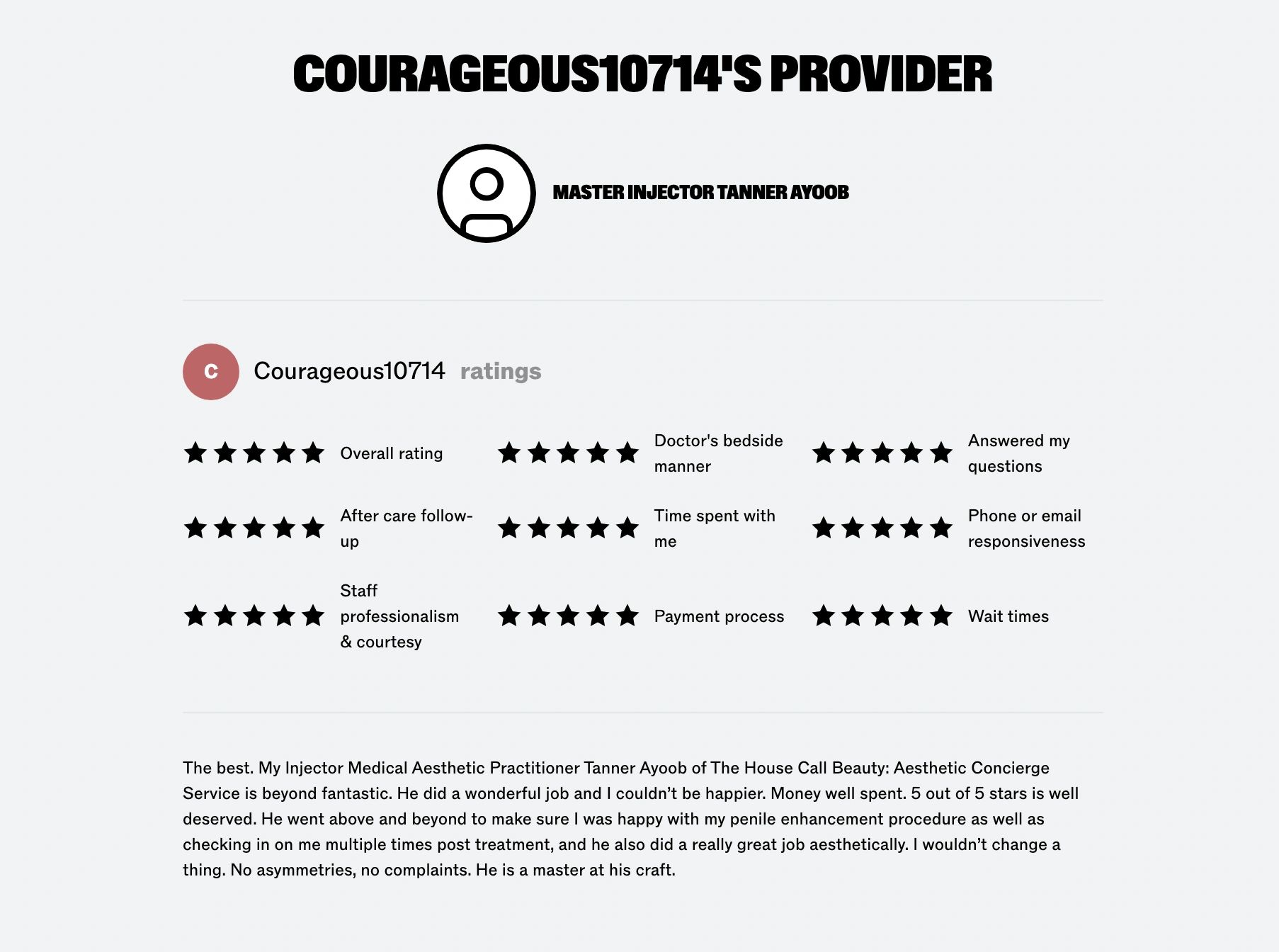
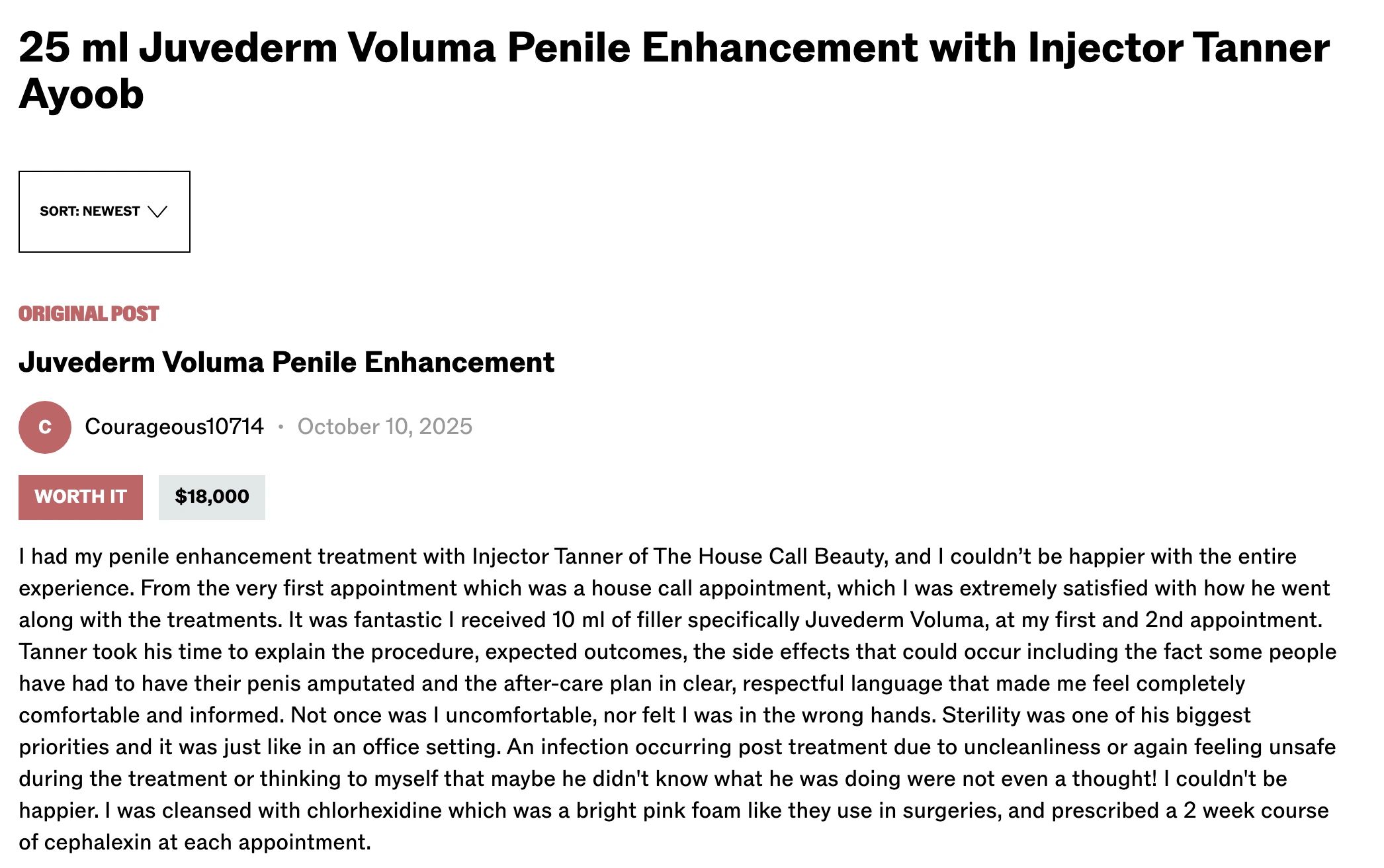
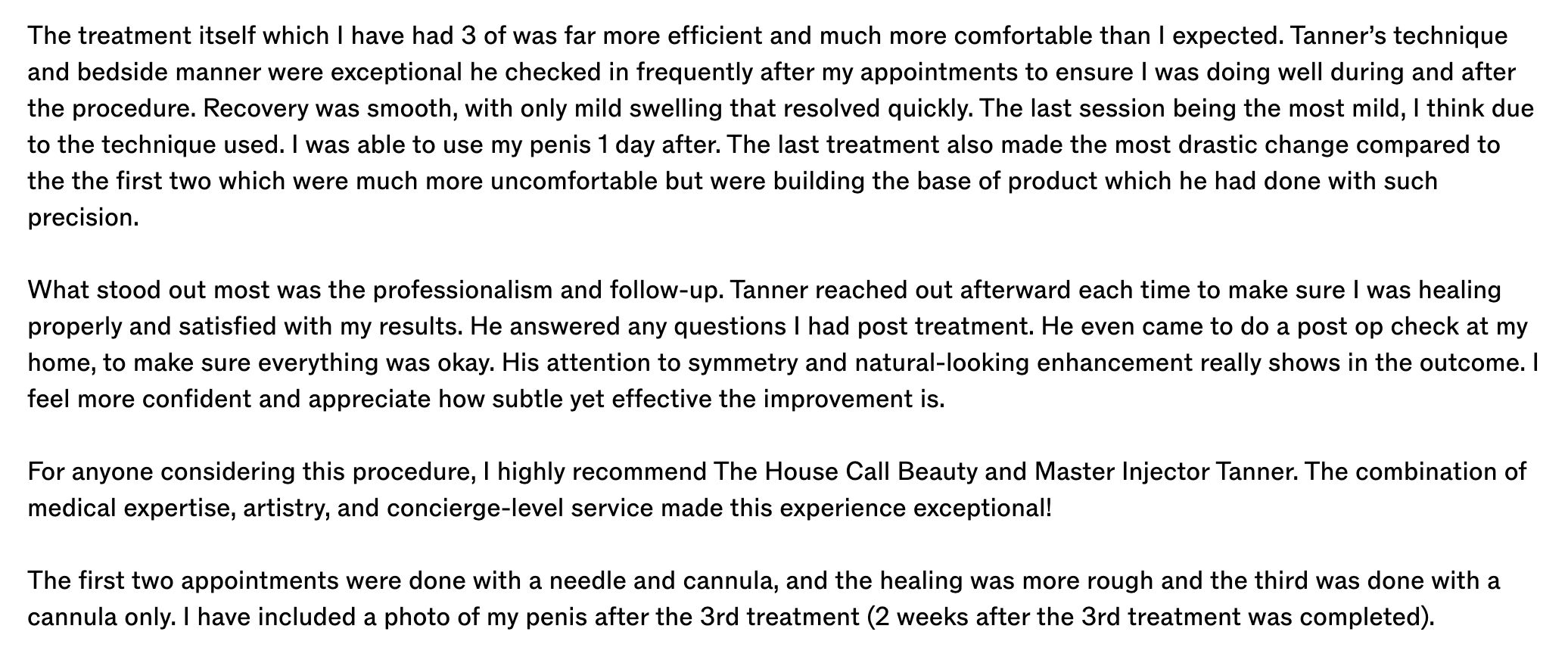
Red Flags
Patients should reconsider treatment when a provider:
- Guarantees a specific girth increase
- Promises permanent results from temporary HA filler
- Claims the procedure has no risks
- Refuses to discuss complications
- Uses unknown or unlabeled products
- Pressures the patient to proceed immediately
- Recommends extreme volume without examination
- Dismisses concerns about pain or discoloration
- Has no emergency plan
- Does not keep hyaluronidase available when injecting HA
- Does not provide written consent
- Does not document the product and lot number
- Offers treatment while the patient has an active infection or lesion
- Encourages immediate sexual activity
- Refuses follow-up
- Uses humiliating or manipulative sales tactics
- Suggests that larger is always better
- Promises improved sexual performance or relationship success
A provider’s willingness to decline treatment can be a positive sign. Ethical clinicians do not treat every patient simply because the patient is willing to pay.
Pricing and Package-Based Treatment
Penile filler pricing is often based on the product, volume, provider experience, location, and complexity of treatment.
Patients should understand what the quoted fee includes:
- Consultation
- Medical assessment
- Filler product
- Procedure
- Local anesthesia
- Follow-up
- Touch-up policy
- Hyaluronidase
- Emergency evaluation
- Management of routine concerns
- Taxes or facility fees
Low pricing may reflect a promotion, but it may also indicate counterfeit product, inadequate medical oversight, limited experience, or poor follow-up infrastructure.
High pricing does not guarantee quality.
Treatment should not be reduced to purchasing the largest package available. The recommended volume should be based on anatomy and safety rather than an upselling target.
The Importance of Follow-Up Access
Patients should know how to contact the provider after treatment.
A responsible practice should provide:
- Written aftercare instructions
- A direct method of communication
- Guidance on expected symptoms
- Clear emergency warning signs
- Scheduled follow-up
- Availability for urgent assessment
- Documentation of concerns and clinical decisions
The patient should not be left to communicate only through a booking platform, social-media direct message, or unmonitored general inbox when urgent symptoms occur.
Aftercare is part of the medical procedure, not an optional customer-service feature.
When a Urologist Should Be Involved
A cosmetic injector should recognize when a concern is outside the scope of aesthetic treatment.
Urological evaluation may be appropriate for:
- Erectile dysfunction
- Peyronie’s disease
- Significant penile curvature
- Painful erections
- Urinary symptoms
- Suspected injury to erectile structures
- Penile implants
- Severe fibrosis
- Buried or concealed penis
- Complications involving deeper anatomy
- Persistent sensory changes
- Reconstructive needs
- Symptoms suggesting malignancy or another disease process
Referral is not a sign of failure. It is part of responsible clinical care.
Trust, Communication, and Professional Boundaries
Because penile enhancement involves an intimate area, patients should feel respected and protected throughout the process.
The provider should maintain:
- Clear consent
- Appropriate draping
- Professional language
- Respectful examination
- Privacy
- Confidential documentation
- Appropriate use of photography
- Freedom from sexualized comments or behavior
- The patient’s right to stop the examination or procedure
Clinical professionalism should remain consistent regardless of the patient’s appearance, sexual orientation, gender identity, relationship status, or reason for seeking treatment.
Patients should never feel mocked, pressured, or exploited.
Why I Believe Provider Selection Matters More Than Product Selection
Patients frequently ask which filler is best. Product selection matters, but the provider’s judgment matters more.
An excellent product can still produce a poor outcome when:
- The wrong patient is treated
- Too much volume is placed
- The tissue plane is inappropriate
- Distribution is uneven
- Sterility is compromised
- Warning signs are ignored
- Follow-up is inadequate
Conversely, a well-qualified provider understands when not to inject, when to use less product, when to stage treatment, when to dissolve, and when to refer.
The safest provider is not the person who claims never to have encountered a complication. Quite the contrary. It is the person who understands that complications are possible and has prepared to recognize and manage them responsibly.
Choosing The House Call Beauty
At The House Call Beauty®, my approach to penile enhancement is based on individualized assessment, anatomical understanding, product knowledge, sterile technique, realistic treatment planning, and continued follow-up.
I do not believe penile enhancement should be approached as a competition to inject the highest volume. Each treatment plan must reflect the patient’s anatomy, tissue capacity, health history, and desired result.
My responsibility is not simply to perform the procedure. It is to determine whether the treatment is appropriate, explain its limitations, reduce avoidable risk, remain available during recovery, and respond promptly if a concern develops.
The provider a patient chooses should be someone they trust not only to create an enhancement, but also to protect their safety before, during, and after treatment.
Frequently Asked Questions About Penile Filler
Patients considering non-surgical penile enhancement often have practical questions about size, sensation, sexual activity, longevity, safety, and how the treatment may affect daily life. The answers below provide general educational information, but they do not replace an individualized consultation or medical examination.
Is Penile Filler Permanent?
Hyaluronic acid penile filler is not considered permanent.
The body gradually breaks down hyaluronic acid over time. The rate of degradation varies according to the product used, treatment volume, individual metabolism, tissue characteristics, mechanical stress, and whether the patient has undergone previous treatments.
Results generally decrease gradually rather than disappearing suddenly on a specific date.
Some patients may retain visible improvement or residual product longer than expected. Others may notice a faster reduction. No provider should guarantee an exact duration.
How Long Does Penile Filler Usually Last?
Longevity varies substantially between patients.
Factors that may influence duration include:
- The specific HA formulation
- Degree of product cross-linking
- Amount of filler placed
- Individual metabolism
- Tissue movement and mechanical stress
- Frequency of sexual activity
- Previous filler treatments
- Inflammatory response
- Maintenance schedule
The advertised duration of a filler in the face should not automatically be applied to penile tissue. The anatomy, mobility, vascularity, and mechanical forces are different.
Maintenance should be based on examination and visible volume loss rather than a fixed calendar date alone.
How Much Girth Can Penile Filler Add?
The amount of girth gained depends on the patient’s baseline anatomy, shaft length, tissue capacity, treatment volume, product behavior, and how the filler is distributed.
The same amount of product may create a noticeably different result in two patients. A longer shaft generally requires more product to create the same proportional circumference increase seen in a shorter shaft.
A provider may offer an estimated range, but an exact increase should not be guaranteed.
The objective should be a smooth, anatomically balanced enhancement rather than reaching the largest possible measurement.
Does Penile Filler Increase Length?
Penile filler is primarily intended to increase circumference.
It does not reliably increase true erect penile length because it does not lengthen the corpora cavernosa or alter the internal erectile structures.
Some patients may perceive greater flaccid length because the added weight and volume can reduce retraction or create a fuller hanging appearance. This should be understood as a visual change rather than a guaranteed anatomical length increase.
Patients primarily concerned about length may benefit from evaluation by a urologist or another appropriately qualified specialist.
Will the Results Look Natural?
Natural-looking results depend on appropriate product selection, placement, distribution, volume, anatomy, and healing.
A well-executed treatment should maintain:
- Smooth contour
- Proportionality
- Softness
- Mobility
- Symmetry
- Appropriate glans-to-shaft balance
- Natural transition at the base
- Acceptable appearance in both flaccid and erect states
Excessive volume, poor distribution, superficial placement, or repeated treatment without adequate assessment may create an unnatural appearance.
The most refined results often enhance the patient’s existing anatomy without making the penis appear obviously injected.
Will Penile Filler Feel Natural?
After swelling resolves and the tissues soften, many patients report that the treated shaft feels natural.
The final texture depends on:
- Product firmness
- Product cohesivity
- Placement depth
- Volume
- Distribution
- Existing scar tissue
- Previous injections
- Individual healing response
Temporary firmness is common during the early recovery period. Persistent hard areas, painful nodules, or clearly isolated deposits should be evaluated.
A highly structured product may feel firmer than a more flexible HA formulation. Product selection should therefore consider tissue movement and feel, not only longevity.
Can a Partner Feel the Filler?
A partner may notice increased circumference and a fuller shaft.
Ideally, the filler should not feel like separate lumps, ridges, or hard deposits. When the product is distributed smoothly and healing progresses normally, the treated tissue should feel like fuller soft tissue rather than an isolated implant.
A partner familiar with the patient’s pretreatment anatomy may notice the difference more easily.
Individual perception varies, so no provider can guarantee that the treatment will be completely undetectable by touch.
Does Penile Filler Affect Erections?
Properly placed filler should remain outside the erectile bodies and should not interfere with the normal physiological mechanism of erection.
Temporary tightness, tenderness, or pressure may occur during erections while swelling is present.
Patients should contact their provider if they experience:
- Severe erection-related pain
- New or worsening curvature
- A significant change in erection quality
- Persistent erectile dysfunction
- Marked swelling during erection
- Loss of sensation
- Any progressive or concerning symptom
Penile filler is not a treatment for erectile dysfunction.
Does Penile Filler Improve Sexual Performance?
Penile filler is primarily a cosmetic girth-enhancement procedure.
It should not be expected to:
- Strengthen erections
- Increase testosterone
- Increase libido
- Treat infertility
- Cure erectile dysfunction
- Guarantee delayed ejaculation
- Guarantee increased partner satisfaction
- Repair a relationship
Some patients experience improved confidence or body satisfaction after treatment. That psychological benefit may positively influence sexual experiences, but it is not equivalent to a medically proven improvement in sexual function.
Claims about sexual performance should be presented carefully and without exaggeration.
Can Penile Filler Help With Premature Ejaculation?
Hyaluronic acid has been studied in the glans for selected cases of premature ejaculation, based on the theory that tissue augmentation may reduce sensitivity in some patients.
However, this is distinct from cosmetic shaft augmentation, and the evidence is not sufficient to suggest that every patient will benefit. But yes, it can if injected into the Glans, or head of the penis.
Premature ejaculation can have psychological, neurological, hormonal, medication-related, and relationship-related causes. Patients seeking treatment should receive an appropriate medical evaluation rather than assuming that filler is the correct solution.
Cosmetic penile filler should not be marketed as a guaranteed treatment for premature ejaculation.
Does Penile Filler Affect Sensation?
The goal is to preserve normal sensation.
Temporary numbness or altered sensitivity may occur due to local anesthetic, swelling, pressure, bruising, or tissue irritation.
Persistent numbness, burning, severe hypersensitivity, reduced sensation, or painful nerve-like symptoms require evaluation.
Changes in sensation should not automatically be dismissed as normal healing, particularly when they worsen or continue beyond the expected recovery period.
Is Penile Filler Painful?
Comfort varies by patient, technique, treatment volume, and anesthesia method.
Patients may feel:
- Initial discomfort from local anesthetic
- Pressure
- Stretching
- Fullness
- Mild burning or tenderness
- Temporary discomfort during product distribution
Severe or disproportionate pain is not expected and should be taken seriously, particularly when accompanied by blanching, mottling, coolness, progressive discoloration, or rapidly increasing swelling.
Pain should be assessed in context rather than ignored.
How Long Does the Procedure Take?
The total appointment may take longer than the injection itself.
Time is required for:
- Medical review
- Consent
- Photography and measurements when applicable
- Examination
- Cleansing and sterile preparation
- Anesthesia
- Treatment
- Final vascular and contour assessment
- Aftercare education
The procedure should not be rushed.
A treatment performed quickly is not necessarily more advanced or more efficient. Careful planning and continuous tissue assessment are more important than speed.
How Much Downtime Is Required?
Most patients can return to light daily activities relatively soon, but the treated tissues still require time to heal.
Temporary swelling, tenderness, bruising, and firmness are common.
Patients may need to avoid:
- Heavy exercise
- Cycling
- Direct groin pressure
- Swimming or hot tubs
- Masturbation
- Penetrative sexual activity
- Aggressive manipulation
Recovery recommendations vary by provider, treatment volume, and healing response.
A patient should not schedule the procedure immediately before travel, a major event, or any situation in which follow-up access would be limited.
When Can I Have Sex After Penile Filler?
Recommendations vary according to the procedure, product, and provider.
Many clinicians advise avoiding masturbation and significant mechanical stress for approximately two weeks. Penetrative sexual activity may be postponed for approximately four weeks or until healing is adequate.
The purpose of this restriction is to reduce unnecessary pressure, friction, inflammation, displacement, and prolonged swelling.
Patients should follow the specific instructions of their treating provider rather than relying on generalized online timelines.
Can I Masturbate After Treatment?
Masturbation creates friction and pressure that may affect newly treated tissue.
Patients are commonly instructed to avoid it during the early healing period. Resuming too soon may contribute to swelling, tenderness, inflammation, filler displacement, or contour changes.
The treating provider should determine when it is appropriate to resume based on the patient’s healing.
Can I Exercise After Penile Filler?
Light walking is generally acceptable unless the provider recommends otherwise.
Patients may be instructed to avoid:
- Heavy lifting
- Running
- High-intensity exercise
- Cycling
- Rowing
- Contact sports
- Activities that place prolonged pressure on the groin
Exercise increases blood flow, friction, heat, and tissue movement. Resuming strenuous activity too early may worsen swelling or bruising.
Can I Shower After Treatment?
Patients can often shower according to their provider’s instructions, but the entry points should be kept clean.
Patients may be advised to avoid:
- Baths
- Hot tubs
- Swimming pools
- Lakes
- Saunas
- Steam rooms
These environments may expose healing entry sites to heat, moisture, pressure, or microorganisms.
The exact timing depends on the provider’s wound-care protocol.
Should I Massage the Filler?
Patients should not massage, roll, squeeze, or attempt to reshape penile filler unless specifically instructed by the treating provider.
Some techniques may include provider-directed massage during recovery, while other treatment methods may require minimal manipulation.
Aggressive or unsupervised massage may contribute to:
- Migration
- Swelling
- Inflammation
- Uneven distribution
- Bruising
- Tissue irritation
- Worsening asymmetry
A patient concerned about a lump or irregularity should contact the provider rather than attempt to correct it independently.
Is Swelling Normal?
Yes. Swelling is one of the most common early effects of penile filler.
It may be more pronounced during the first several days and can temporarily exaggerate the degree of enlargement.
Swelling should generally improve over time.
Patients should seek prompt evaluation when swelling is:
- Rapidly worsening
- Severe
- Highly painful
- Associated with abnormal skin color
- Accompanied by fever or drainage
- Causing difficulty urinating
- Becoming tense or progressively asymmetric
Not every episode of swelling is harmless.
Is Bruising Normal?
Mild bruising can occur after any injectable treatment.
The degree varies according to blood vessel anatomy, technique, medications, supplements, and individual tendency to bruise.
Bruising typically improves gradually. Rapidly expanding swelling, significant bleeding, or severe pressure may suggest a hematoma and requires assessment.
Patients should not stop prescribed blood-thinning medication without approval from the prescribing clinician.
What if the Filler Looks Uneven?
Minor asymmetry is common during early healing because swelling rarely resolves evenly.
Patients should avoid judging the final result immediately after treatment.
Once swelling has substantially resolved, a persistent irregularity may be managed through:
- Observation
- Provider-directed manipulation
- A localized touch-up
- Partial dissolution
- Complete dissolution
- Imaging
- Specialist referral
The correct approach depends on the cause.
Adding more filler should not be the automatic response to every irregularity.
What if I Feel a Lump?
A temporary palpable area may occur while the filler is settling.
A persistent lump may represent:
- Concentrated filler
- Swelling
- Fibrosis
- Inflammation
- Infection
- A delayed tissue reaction
- Product placed too superficially
- Interaction with previous injectable material
Patients should not puncture, squeeze, or aggressively massage the area.
The provider should assess whether the lump is soft or firm, painful or painless, inflamed or noninflamed, and whether imaging or dissolution is appropriate.
Can Penile Filler Migrate?
Yes. Migration is a recognized potential complication.
Product may shift or accumulate outside the intended area due to:
- Excessive volume
- Inappropriate placement
- Tissue movement
- Early sexual activity
- Repeated manipulation
- Scar tissue
- Product characteristics
- Uneven distribution
- Individual anatomy
Migration may cause ridges, asymmetry, distal or proximal accumulation, or an unnatural contour.
HA migration may sometimes be managed with hyaluronidase, but treatment must be individualized.
Can Penile Filler Be Dissolved?
Hyaluronic acid filler may be reduced or dissolved using hyaluronidase.
Dissolution may be considered for:
- Vascular compromise
- Migration
- Significant asymmetry
- Persistent nodules
- Unwanted volume
- Incorrect placement
- Selected inflammatory or infectious complications
Hyaluronidase is not a perfectly predictable reset.
More than one treatment may be required, and the appearance may not return immediately to the exact pretreatment baseline. Hyaluronidase may also temporarily affect naturally occurring HA within surrounding tissues.
Will Dissolving the Filler Damage the Penis?
When used appropriately, hyaluronidase is an important medical tool for managing HA filler.
Temporary effects may include:
- Swelling
- Bruising
- Tenderness
- Reduced tissue fullness
- Temporary looseness
- Uneven early deflation
- Allergic reaction
The risks of dissolution must be weighed against the reason it is being performed.
In an urgent vascular event, preserving tissue circulation takes priority over maintaining the cosmetic result.
Can Penile Filler Be Repeated?
Yes, but additional treatment should follow appropriate examination.
Repeat treatment may be used for:
- Staged enhancement
- Minor refinement
- Restoration of lost volume
- Maintenance
- Correction of selected asymmetry
A provider should assess how much filler remains, how the tissues have responded, and whether more product can be added safely.
Repeated injections without reassessment may increase the risk of overfilling, migration, firmness, and contour irregularity.
How Often Is Maintenance Needed?
There is no universal maintenance schedule.
Maintenance depends on:
- Visible volume loss
- Remaining product
- Patient goals
- Tissue quality
- Previous treatment response
- Product longevity
- Safety considerations
Some patients may choose a small maintenance treatment after gradual reduction. Others may allow the filler to decline substantially before deciding whether to repeat treatment.
Maintenance should be clinically indicated rather than automatically scheduled.
Can I Get Penile Filler if I Am Uncircumcised?
Circumcision status does not automatically determine candidacy, but it affects anatomy, skin mobility, swelling, and product distribution.
Uncircumcised patients may have a greater tendency toward distal swelling or product movement within mobile tissue. Careful assessment and conservative planning may therefore be especially important.
Some patients may not be appropriate candidates depending on foreskin anatomy, tissue laxity, hygiene, previous inflammation, or other findings.
A provider should evaluate the individual patient rather than apply a universal protocol.
Can I Get Penile Filler if I Have Peyronie’s Disease?
Peyronie’s disease involves fibrous plaque within the penis and may cause curvature, pain, narrowing, shortening, or erectile dysfunction.
Filler does not remove the plaque or treat the underlying disease.
In selected cases, filler may cosmetically camouflage a superficial contour defect, but this should not be attempted without appropriate diagnosis and consideration of urological evaluation.
Patients with new curvature, painful erections, palpable plaque, or progressive deformity should see a urologist.
Can Penile Filler Correct Asymmetry?
Filler may improve selected superficial asymmetries, contour depressions, or visible transitions.
However, it cannot correct every cause of asymmetry.
Structural curvature, fibrosis, erectile-body abnormalities, prior surgery, unknown materials, and Peyronie’s disease may require a different form of evaluation or treatment.
The provider must determine whether the concern is superficial and cosmetic or related to deeper anatomy.
Can Penile Filler Treat Erectile Dysfunction?
No.
Erectile dysfunction may result from:
- Vascular disease
- Diabetes
- Neurological conditions
- Hormonal abnormalities
- Medication effects
- Psychological factors
- Pelvic surgery
- Penile fibrosis
- Other medical conditions
Penile filler does not correct these causes.
Patients with erectile dysfunction should receive appropriate medical evaluation rather than relying on cosmetic treatment.
Can I Get Penile Filler if I Use TriMix?
TriMix use does not automatically exclude treatment, but it must be disclosed.
Repeated intracavernosal injections can contribute to bruising, scar tissue, fibrosis, nodules, or asymmetry.
Patients should inform the provider about:
- How frequently TriMix is used
- Injection locations
- Any pain or curvature
- Palpable scar tissue
- Changes in erection quality
- Previous complications
Suspected fibrosis or structural change may require urological evaluation before cosmetic treatment.
Can I Get Penile Filler if I Have Diabetes?
Diabetes does not automatically exclude every patient, but poor glucose control may increase the risk of infection, delayed healing, impaired circulation, and skin breakdown.
The provider may consider:
- Recent hemoglobin A1c
- Blood glucose control
- Neuropathy
- Vascular disease
- History of delayed wound healing
- Medication adherence
- Previous infections
Elective treatment may need to be postponed when diabetes is poorly controlled or complications are present.
Can I Get Penile Filler if I Take Blood Thinners?
Anticoagulant and antiplatelet medications may increase bruising and bleeding risk.
Patients should disclose all prescribed medications, over-the-counter drugs, and supplements.
They should not stop medically necessary medication without approval from the prescribing healthcare professional.
The provider may determine that treatment should be postponed, modified, or declined based on the individual risk.
Can I Get Penile Filler if I Have Herpes or Another STI?
Treatment should generally be postponed when there is an active genital infection, outbreak, ulcer, lesion, or untreated sexually transmitted infection.
Injecting through or near infected tissue may increase the risk of spreading infection and causing complications.
Patients should disclose relevant history honestly. Medical treatment or clearance may be required before elective filler is considered.
Can Penile Filler Cause Infection?
Yes. Infection is an uncommon but possible complication of any injectable procedure.
Warning signs may include:
- Increasing redness
- Progressive warmth
- Worsening pain
- Pus or drainage
- Fever or chills
- Foul odor
- Swelling that worsens after initially improving
- Skin breakdown
Suspected infection requires medical evaluation.
Patients should not self-treat by puncturing the area, squeezing it, applying unapproved topical products, or taking leftover antibiotics.
What Are the Signs of Vascular Compromise?
Possible warning signs include:
- Severe or disproportionate pain
- Sudden blanching
- Pale, gray, blue, purple, or mottled skin
- Coolness
- Delayed capillary refill
- Progressive discoloration
- Blistering
- Skin breakdown
- Increasing pain rather than improvement
Vascular compromise is time-sensitive.
Patients should contact the treating provider immediately and seek urgent medical evaluation when these symptoms occur.
What Happens if a Complication Occurs?
Management depends on the complication.
Possible interventions may include:
- Immediate clinical examination
- Hyaluronidase
- Antibiotics
- Anti-inflammatory medication
- Wound care
- Imaging
- Drainage
- Urological evaluation
- Plastic-surgery or reconstructive consultation
- Emergency-department assessment
- Hospital treatment in severe cases
The provider should remain available, document the concern, communicate honestly, and escalate care when necessary.
No responsible injector should claim that complications are impossible.
Is Penile Filler FDA-Approved?
Individual filler products may be FDA-approved for specific facial or soft-tissue indications, but penile augmentation is generally an off-label use in the United States. As of the publishing of this article, in the USA specifically, many uses we may hear of or see such as on social media for dermal fillers remain off-label.
Off-label treatment means the product is being used in an anatomical area or manner that is not specifically included in its approved labeling.
Off-label use is common throughout medicine, but it requires appropriate clinical judgment, patient education, and informed consent.
FDA approval of a filler does not mean that every use of that filler is FDA-approved.
Are All Hyaluronic Acid Fillers the Same?
No.
HA fillers differ in:
- Elasticity
- Firmness
- Cohesivity
- Viscosity
- Flexibility
- Water attraction
- Cross-linking
- Extrusion force
- Tissue integration
- Intended clinical use
The firmest or longest-lasting filler is not automatically the best choice.
Product selection should be based on anatomy, treatment goals, tissue behavior, and the provider’s familiarity with the filler.
Are Korean or European Fillers Safe?
A filler’s country of manufacture alone does not establish whether it is safe or appropriate.
The relevant questions are whether the product is:
- Authentic
- Properly stored
- Legally obtained
- Traceable
- Manufactured under appropriate quality standards
- Authorized for distribution in the jurisdiction
- Suitable for the proposed use
Patients should be cautious when the provider cannot identify the manufacturer, product name, lot number, expiration date, or source.
The use of vague descriptions such as “premium imported filler” is not sufficient.
Is a Cannula Safer Than a Needle?
A blunt-tip cannula may reduce the number of sharp-needle passes and may be useful for broader distribution.
However, it does not eliminate the possibility of:
- Vascular injury
- Bleeding
- Tissue trauma
- Incorrect placement
- Infection
- Migration
- Other complications
A needle may offer precision for selected focal corrections but can penetrate vessels and deeper structures.
Neither instrument is automatically safe. Outcomes depend on provider training, anatomy knowledge, technique, product selection, and clinical judgment.
How Many Syringes Will I Need?
There is no universal answer.
The appropriate volume depends on:
- Shaft length and circumference
- Desired change
- Skin elasticity
- Tissue capacity
- Product selected
- Previous filler
- Existing scar tissue
- Whether treatment is staged
- Safety limitations
A responsible provider should examine the patient before recommending a volume.
Package size should not determine treatment anatomy.
Can I Receive a Large Amount of Filler in One Session?
Some patients can accommodate more volume than others, but there is no single maximum appropriate for everyone.
Larger treatment volumes may increase the risk of:
- Swelling
- Tissue tension
- Migration
- Firmness
- Irregular distribution
- Asymmetry
- Compression
- Prolonged recovery
A staged approach may be safer and more predictable for many patients.
The goal should not be to inject as much as possible. The goal should be to create the best result the tissue can safely support.
Is Penile Filler Worth It?
The value of treatment depends on the patient’s goals, expectations, anatomy, financial priorities, and tolerance for maintenance and risk.
A suitable patient may value:
- Increased girth
- Fuller flaccid appearance
- Improved proportion
- Reversibility
- Limited downtime
- Ability to stage treatment
Another patient may decide that temporary results, expense, recovery restrictions, or potential complications outweigh the expected benefit.
A consultation should help the patient make an informed decision rather than pressure them toward treatment.
How Much Does Penile Filler Cost?
Pricing varies according to:
- Product
- Volume
- Provider experience
- Geographic location
- Complexity
- Anesthesia
- Follow-up
- Correction policies
- Facility fees
Patients should ask what the quoted price includes.
A low price does not necessarily represent good value, and a high price does not guarantee expertise.
Provider qualifications, product authenticity, follow-up access, and emergency preparedness should be considered alongside cost.
Is Financing Available?
Some practices offer financing, payment plans, or third-party medical-credit options.
Patients should review:
- Interest rates
- Financing fees
- Payment schedule
- Refund policies
- What happens if treatment is postponed
- Whether future maintenance is included
- Whether complication management carries additional charges
Patients should not feel pressured to take on debt for an elective cosmetic procedure.
What Should I Bring to My Consultation?
Patients should bring or prepare:
- A complete medication list
- Supplement information
- Allergy history
- Relevant medical diagnoses
- Previous procedure records
- Names of prior fillers or injected materials
- Recent laboratory information when requested
- Specific treatment goals
- Questions about recovery and risks
Honest disclosure is essential.
The provider cannot plan safely when important medical or procedural history is withheld.
Can Treatment Be Performed the Same Day as the Consultation?
Same-day treatment may be possible in selected cases, but it should not be guaranteed.
Treatment may need to be postponed when:
- Medical information is incomplete
- There is an active infection or lesion
- Previous injected material is unknown
- Additional evaluation is needed
- Expectations require further discussion
- The patient has not arranged adequate recovery time
- The provider determines that treatment is inappropriate
A consultation should remain a genuine clinical assessment, not merely a sales step before injection.
What Should I Look for in a Provider?
Patients should look for:
- Legal authority to perform the procedure
- Specific penile-filler education
- Knowledge of anatomy
- Authentic, traceable products
- Sterile technique
- Informed consent
- Clear aftercare
- Hyaluronidase availability
- Complication protocols
- Follow-up access
- Referral pathways
- Honest discussion of limitations
- Willingness to decline unsafe treatment
Social-media popularity and promotional titles are not substitutes for proper qualifications and clinical systems.
What Questions Should I Ask Before Booking?
Useful questions include:
- How many penile filler procedures have you performed?
- What specific training have you completed?
- Which product will you use?
- Why is that product appropriate for me?
- Is the treatment off-label?
- How much volume do you recommend and why?
- What are the major risks?
- Do you have hyaluronidase available?
- How do I contact you after treatment?
- What happens if I experience a complication?
- Is follow-up included?
- When may I resume sexual activity?
- What correction options are available?
- When would you refer me to a urologist?
A qualified provider should answer these questions directly and without becoming defensive.
When Should I Not Proceed?
Treatment should be reconsidered or postponed when:
- The provider cannot explain their credentials
- The product cannot be identified
- Risks are minimized or denied
- Extreme enlargement is promised
- The patient is pressured to pay immediately
- No medical history is taken
- No consent process occurs
- There is no follow-up plan
- The provider has no hyaluronidase
- The treatment environment is inappropriate
- The patient has active infection or unexplained lesions
- Expectations are unrealistic
- The procedure is being sought primarily because of pressure from another person
The right decision may be to delay treatment or decline it entirely.
Final Perspective
Penile filler can offer meaningful cosmetic improvement for appropriately selected adult patients, but it should be approached with the same seriousness as any advanced injectable procedure.
Patients should understand what the treatment can realistically accomplish, what it cannot accomplish, how recovery works, what complications may occur, and who will remain responsible for their care afterward.
At The House Call Beauty®, I believe informed patients make better decisions. Education is not intended to frighten patients away from treatment. It is intended to ensure that anyone choosing penile enhancement does so with realistic expectations, complete information, and an understanding that patient safety must always take priority over size.
About the Author
Tanner Ayoob is the founder of The House Call Beauty® and an advanced medical aesthetic practitioner, Master Injector, and aesthetic training specialist with extensive experience in facial, body, and male aesthetic procedures.
His clinical approach emphasizes individualized treatment planning, anatomical precision, informed consent, complication preparedness, and continuity of care. His work in male aesthetics includes education and treatment planning for nonsurgical penile enhancement using injectable products, with particular attention to realistic outcomes, procedural limitations, aftercare, and risk reduction.
Through The House Call Beauty®, Tanner provides concierge aesthetic services and advanced patient education designed to help adults make informed, safety-centered decisions regarding elective cosmetic procedures.
This material is provided for general educational purposes and does not replace an individualized medical evaluation, diagnosis, or treatment plan.
Your next step
Let’s plan your next visit.
Explore current treatment options, request an appointment, or contact The House Call Beauty.